
How an Author and Iowa Alum Turned Personal Struggles Into Healing Stories
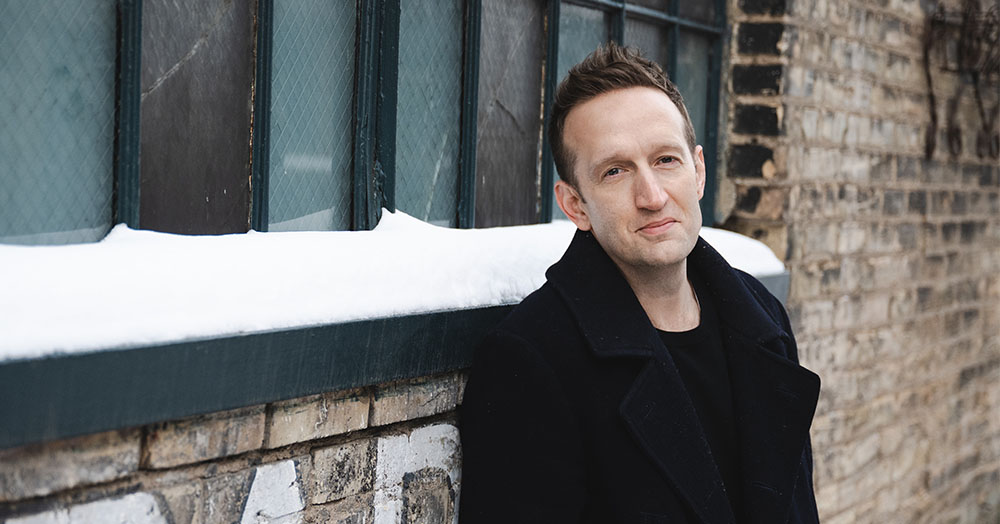 PHOTO: LESLIE PLESSER
Author Peter Bognanni
PHOTO: LESLIE PLESSER
Author Peter Bognanni
I was diagnosed with anxiety disorder when I was 18 years old. Right around the age of the characters I write novels about now. At the time, back in the dark ages of mental health awareness, I did everything possible to hide my condition. I worked at a Barnes & Noble as an aggressively mediocre barista, and I can still remember locking myself in the employee bathroom each day to have my afternoon panic attack. I would stand, bracing myself against the sink, the sound of the screaming steam wand blending with my racing thoughts while I waited, teeth clenched, for my heart rate to slow. Later, I’d emerge, looking like I had just been involved in an exorcism, to resume making Frappuccinos for my suburban regulars.
For a long time, I lived a double life.
On the outside, I was an extroverted theater kid, happy to annoy you by quoting entire scenes from movies in a Perkins at 1 in the morning. On the inside, I was often in distress. Senses on high alert for a danger that I couldn’t quite name. But you would have never known it by looking at me. I’ve come to see this as one of the hardest things about anxiety. No one can really see it unless you let them. So, if you don’t tell anybody that you’re constantly terrified, you can pretty much pass as someone with a perfectly calm and helpful brain.
I embodied this lie as long as I possibly could, white-knuckling my days until I finally reached a point where it became impossible to keep everything hidden. On a drive home from college, after a semester where I’d barely kept my head above water, it all came spilling out. I sat in a highway rest stop, semitrucks roaring past me, locked in the grips of a soul-rattling anxiety attack I couldn’t quiet. That’s when I knew it was time to talk to someone.
I got help that summer. I got on medication, which changed my life, and I eventually made it to therapy. And while I couldn’t instantly rewire my brain the way I longed to, I got things to a baseline where gradual recovery felt possible. After a while, I could go out with friends again without worrying I was going to hyperventilate in the middle of an action movie. I could do breathing exercises in my car. I could talk myself out of the worst doom spirals. And eventually, I could even make a latte without taking refuge in a walk-in freezer.
I wish I could say this was the end of the story. That once I got treatment, I never had any problems again. But even after I got a handle on the worst of my disorder, there was one big thing I couldn’t seem to shake: the shame. Despite all my hard work to get better, I constantly told myself I was weak. That I didn’t have enough grit to face the world. This cruel inner voice (which, by the way, sounded a little like Clint Eastwood) was my final anxiety boss. No matter how much progress I made, it always seemed to be there, ready to convince me that I wasn’t enough.
“Somehow, making up a person from scratch allowed me to find more beauty and meaning in being an overly sensitive human in the world.” —Peter Bognanni
Eventually, I found a way to quiet it. But it came from a very unexpected place. Writing fiction. From a cursory Google search, there don’t seem to be any online resources that tell you to combat panic attacks by writing novels. But within days of my very first creative writing class, I realized that writing had a couple immediate benefits. 1) I could disappear into a story for hours and escape the pitfalls of my melodramatic brain. And 2) it allowed me to find empathy for my struggling fictional characters that I couldn’t always summon for myself.
Somehow, making up a person from scratch allowed me to find more beauty and meaning in being an overly sensitive human in the world. In fiction, you learn pretty early that a perfect, well-socialized character is basically useless. Nobody identifies with perfection. What actually makes a reader connect to a character is often the flaws they’d love to keep hidden. It’s their desperate attempt to be a little better today than they were yesterday. In the end, perfect characters are pretty boring.
So are perfect humans.
I arrived at the Iowa Writers’ Workshop in fall 2003, with only the vaguest idea of what I wanted to write about. My teachers were incredible and encouraging, and my classmates’ talent was inspiring, but I was unsure about what I might contribute as a writer. Looking back, many of my early stories were about self-defeating characters. People (kind of like me) who couldn’t get out of their own heads. People (kind of like me) who were stuck in excruciating situations of their own making. My first published novel was literally about a character (kind of like me?) who was trapped in a geodesic dome and couldn’t get out to face the world around him. I was, in retrospect, writing mental illness without writing mental illness.
It wasn’t until my second book, when I wrote for a young adult audience, that I confronted the issue directly. The characters in that book are dealing with the aftermath of a friend’s suicide, trying to understand what caused it. And even more than the writing, it was the reaction to that book that encouraged me to say more about the subject. After Things I'm Seeing Without You came out, I found myself speaking in schools, connecting directly with readers. And I learned very quickly that teen readers will tell you honestly what they think of your book. Sometimes, very honestly (hello one-star Goodreads reviews!). Most of the time, though, this is a good thing. I started hearing from young people who were going through the same things as my characters. And, unlike me at their age, they were willing to talk about it.
It’s a conversation more of us should be having. According to a study published in JAMA Pediatrics, in 2012 only about 11.6% of teens worldwide had anxiety. But during the pandemic, those numbers nearly doubled to 20.5%. One in 5. These are kids who need someone to acknowledge the truth about their experience. Stories can provide that acknowledgement. They can often help just by putting a name to something. Or, as the writer George M. Johnson says, “You sometimes don’t know you exist until you realize someone like you existed before.”
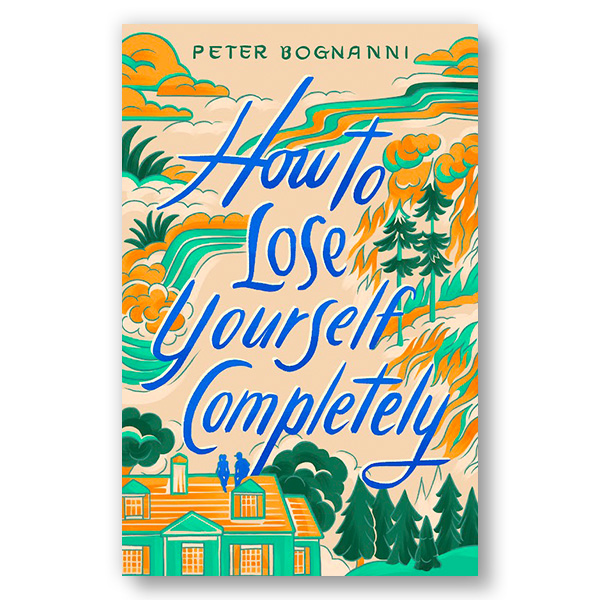 How to Lose Yourself Completely
by Peter Bognanni (05MFA)
Balzar + Bray
Available June 2
My latest novel, How to Lose Yourself Completely, is the culmination of my attempts to write about mental illness more directly. It’s about a young character dealing head-on with panic and grief who goes on a group wilderness therapy trip as a last resort. But when the guide goes missing, he and his new friends have to help each other make it home. I put everything I knew about anxiety into this story, all those daily indignities and frustrations of living with an uncalm mind, but I also included the very real hope that getting past the worst of it is wholly possible. The novel is a survival story, but it’s also a metaphor for everything that brave teens with anxiety disorder go through every day.
Like most authors who write for young people, I’m shamelessly trying to make the books I wish I’d had when I was younger. Books that would have allowed me to see myself in a fuller, more generous light when I was struggling. Because even if a book can’t magically heal you, it might keep you from staying silent. Or cause a flicker of recognition when you most need one. On my most optimistic days—the days when Mr. Eastwood is not around—it feels possible that the connection between writer and reader can create this awareness.
When I was at Iowa, one of my teachers often spoke about “the reader-writer bridge.” The idea is that if you build the right bridge by using the right amount of subtext, the right inhabitable characters, and the right entry point to a story, the reader will walk that bridge and enter your text as a cocreator. They will make the book alongside you, and even live it alongside you. These days, it’s my hope that readers who need it will find my bridge, see themselves, and create their own next chapter.
Peter Bognanni (05MFA) is a novelist and associate professor of creative writing at Macalester College in St. Paul, Minnesota. His new novel, How to Lose Yourself Completely, is available June 2 wherever books are sold.