
An Iowa Theatre Alum Travels Back in Time to Portray Thomas Jefferson
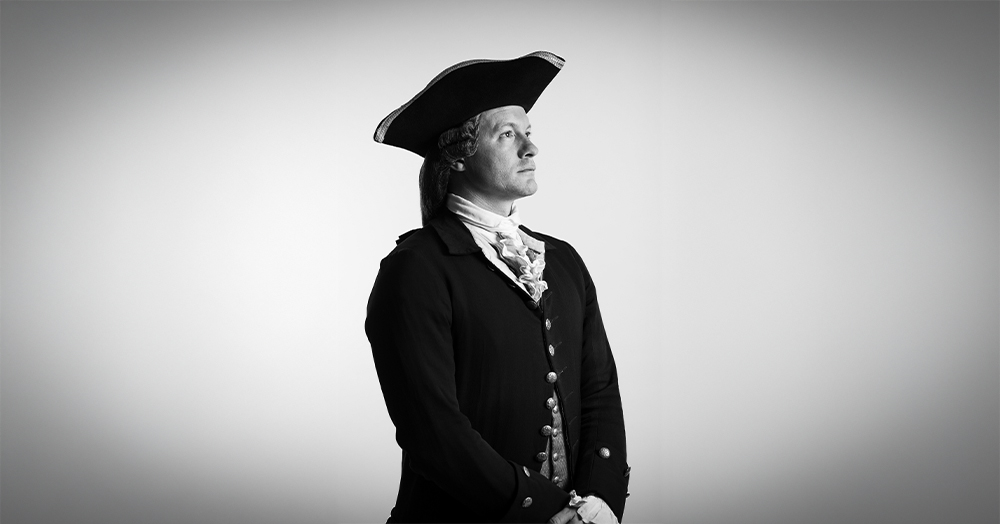 PHOTO: BRIAN NEWSON/THE COLONIAL WILLIAMSBURG FOUNDATION
Visitors to Colonial Williamsburg in Virginia learn about the American Revolution from actors portraying the nation's builders, including University of Iowa theatre arts grad Kurt Smith as President Thomas Jefferson.
PHOTO: BRIAN NEWSON/THE COLONIAL WILLIAMSBURG FOUNDATION
Visitors to Colonial Williamsburg in Virginia learn about the American Revolution from actors portraying the nation's builders, including University of Iowa theatre arts grad Kurt Smith as President Thomas Jefferson.
At Colonial Williamsburg, America’s preeminent living-history museum town in Virginia, young Thomas Jefferson is welcoming visitors. “Good day, friends. How are you faring?” he says cheerily. “You have no complaints? You must not be Virginians!
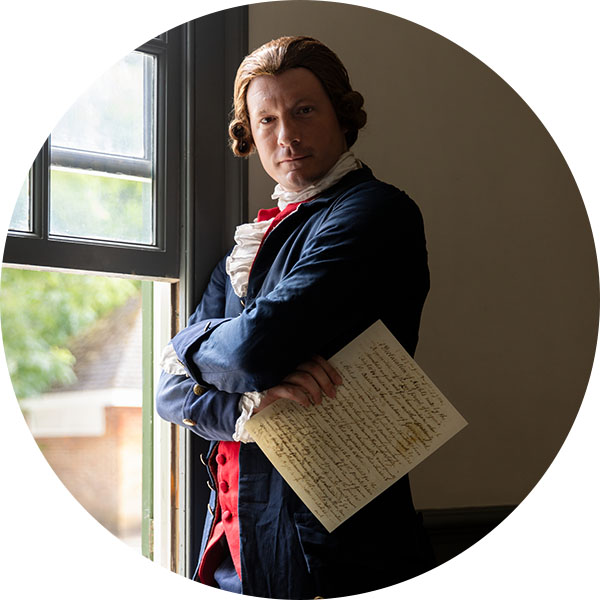 PHOTO: BRENDAN SOSTAK/THE COLONIAL WILLIAMSBURG FOUNDATION
Kurt Smith portrays Thomas Jefferson writing the Declaration of Independence in 1776.
PHOTO: BRENDAN SOSTAK/THE COLONIAL WILLIAMSBURG FOUNDATION
Kurt Smith portrays Thomas Jefferson writing the Declaration of Independence in 1776.
“If not Virginia, where from? Pennsylvania, land of religious anarchy? The Ohio territories? Welcome to civilization! Upper Canada? Bonjour! Are you immigrating here? Oh, you should. We are trying to encourage immigrants.”
Under a wig and tricorn hat, striding the boards with leather-soled shoes, Kurt Smith (12MFA) is in his element. At 42, a decade into portraying the Founding Father and third American president, he takes the rapt audience through the issues: natural rights versus civil authority, religion and society, slavery, voting (privilege or obligation?), and Jefferson as a man of his time or ahead of it.
On that last point, visitors are often surprised to hear that Jefferson proposed laws for public education of both sexes; for ending the slave trade; for equitable treatment of religions, from Quakerism to Judaism to Islam; and for allowing daughters to inherit property. “Jefferson was pretty progressive for his time,” says Smith.
Classmates, in turn, may be surprised to hear that Smith, once a biology major, switched to theater as an undergraduate at the University of Montana. He hastily applied to graduate schools, intrigued by the Iowa theatre arts program. “I was so deeply interested in working with the best playwrights in the world and creating new works alongside them,” he says. “In a way, that process, from concept through to product, is entirely in line with what I do now—with primary sources, of course.”
“I would not have the job I have now if not for the University of Iowa.” —Kurt Smith
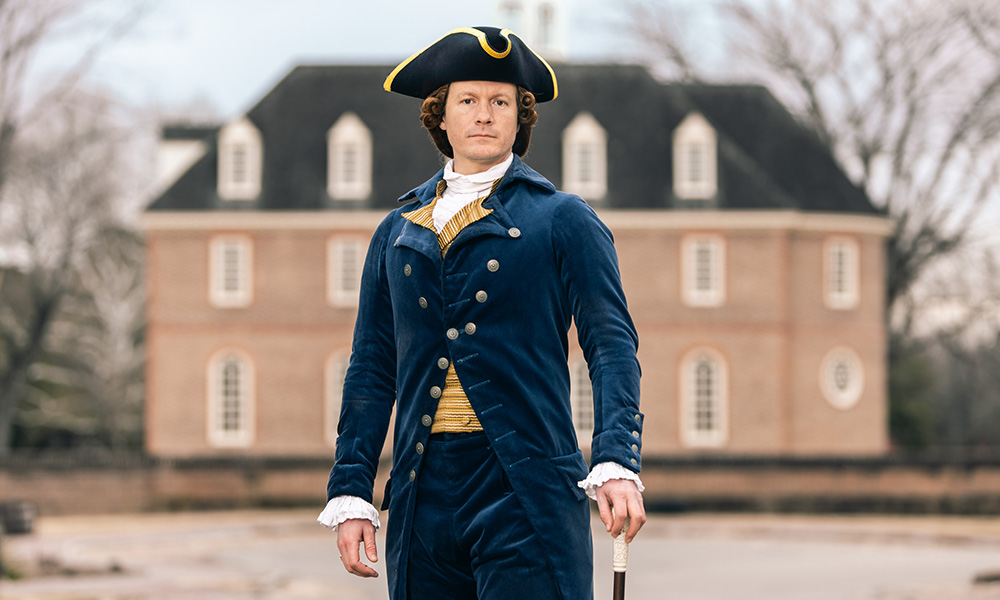 PHOTO: BRENDAN SOSTAK/THE COLONIAL WILLIAMSBURG FOUNDATION
Kurt Smith (portraying Thomas Jefferson) stands in front of Colonial Williamsburg's Capitol, a reconstruction of the building that housed the Virginia General Assembly from 1705 to 1780.
PHOTO: BRENDAN SOSTAK/THE COLONIAL WILLIAMSBURG FOUNDATION
Kurt Smith (portraying Thomas Jefferson) stands in front of Colonial Williamsburg's Capitol, a reconstruction of the building that housed the Virginia General Assembly from 1705 to 1780.
After graduating from Iowa, Smith and his wife, Michelle Greensmith (12MFA), sought to launch their theater careers in New York—maybe you caught his ads for Starbucks and Doritos. Meanwhile, Brandon Bruce (10MFA), who had directed Smith at Iowa, became senior manager of performance interpretation for the Colonial Williamsburg Foundation. Bruce hired Smith for summer stock in 2014, then sent a crucial email almost a year later: CWF was looking for a young Thomas Jefferson. “I would not have the job I have now if not for the University of Iowa,” says Smith.
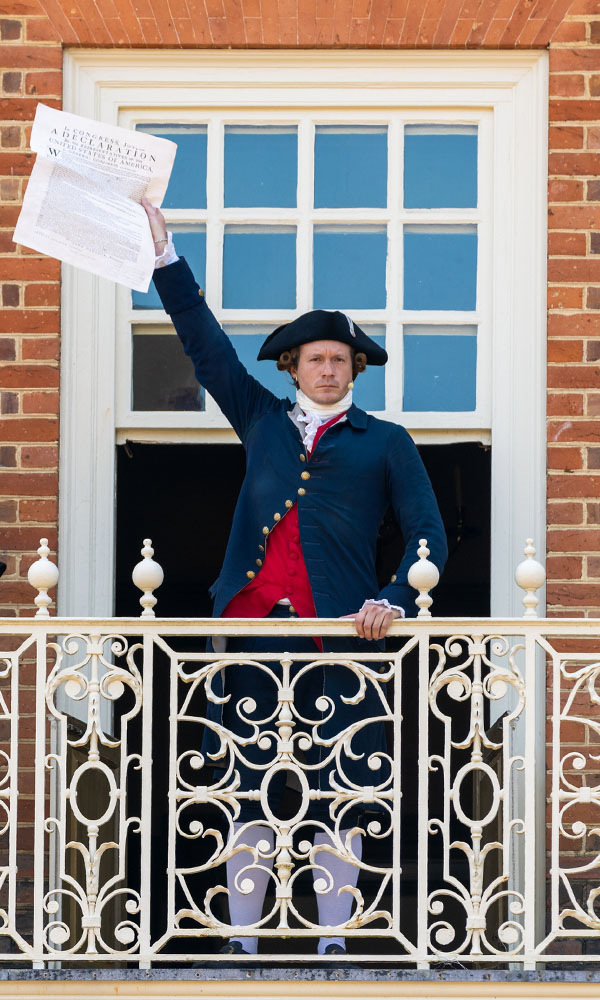 PHOTO: BRENDAN SOSTAK/THE COLONIAL WILLIAMSBURG FOUNDATION
Kurt Smith, as Thomas Jefferson, reads the Declaration of Independence from the balcony of Colonial Williamsburg's Capitol as part of Fourth of July festivities for the historic attraction.
PHOTO: BRENDAN SOSTAK/THE COLONIAL WILLIAMSBURG FOUNDATION
Kurt Smith, as Thomas Jefferson, reads the Declaration of Independence from the balcony of Colonial Williamsburg's Capitol as part of Fourth of July festivities for the historic attraction.
Winning the coveted role after several rounds of auditions, Smith had six months to study. He still does, turning to Jefferson’s 50,000 letters every couple of days. To prepare for something specific—an appearance with Virginia’s governor, say, or one of the four scripts he’s co-writing for CWF’s semiquincentennial celebration—he digs into sources ranging from minutes of the Continental Congress to negotiations for the Louisiana Purchase to Jefferson’s bar tabs. (“Which we have!” he says.)
Reflecting on the man’s legacy, Smith muses, “The things that are right about Jefferson are the things that are right about America, and the things that are complicated about Jefferson are complicated about America. He had faults, he had hopes … he was human.”
One way Smith keeps the portrayal fresh is by having Jefferson debate publicly with fellow Founding Fathers such as George Wythe and Patrick Henry. Another is through side projects like working with Katharine Pittman—who plays CWF’s Martha Washington—to create street performances that explain topics such as why the colonies voted for independence.
With experience, Smith’s initial anxiety about answering visitors’ questions correctly has shifted toward handling questions posed to Jefferson but clearly about the 21st century. “It’s both powerful and a little terrifying that I’m talking to people with real concerns about the state of our nation, yet I have to respond as Jefferson” in both words and sentiment, he says.
“If we’re still talking about rights and national ideals in 2026, that’s a good thing. We should be.” —Kurt Smith
Plus, he finds, listeners bring their own interpretations. When a partisan TV show broadcast a segment from Colonial Williamsburg, Smith—in character—read from the Declaration of Independence. He got resistance off-air. “They were certain I was pushing an agenda, editing Thomas Jefferson’s words,” he says. “If you hear the Declaration, and there are parts of it that strike you as politically motivated …” He pauses to laugh. “It’s inherently political,” says Smith. “My glass-half-full side says that if [someone objects], that’s good; it means you’re listening, and the words are relevant.
“I genuinely think the work the foundation and I do has the potential to increase the lifespan of the nation,” he says. “People come to museums and to me as Thomas Jefferson seeking an understanding of where we were, where we are today, and how far we can still go.
“If we’re still talking about rights and national ideals in 2026, that’s a good thing,” Smith declares. “We should be.”