
Iowa Expert Helps Global Leaders Consider Risks of AI in Warfare
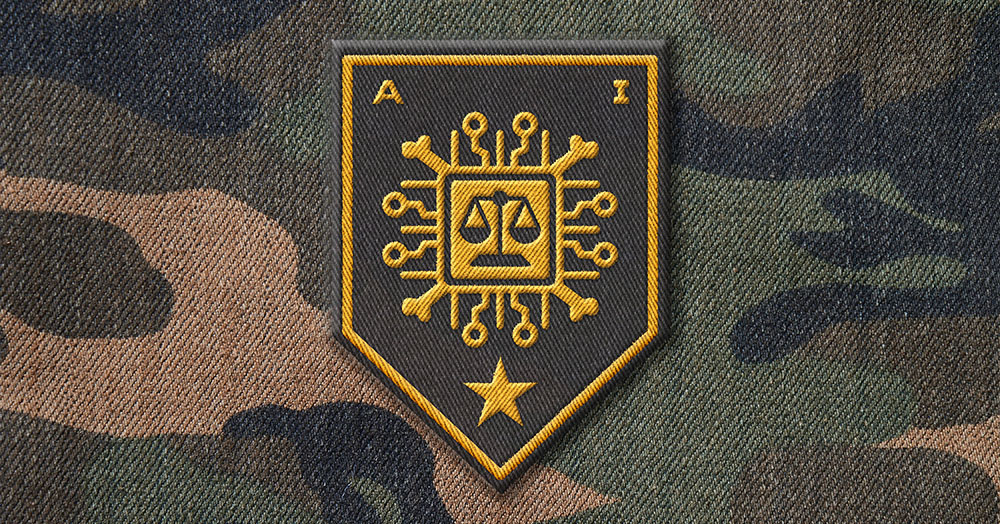 ILLUSTRATION: NICK BEECHER
Originally from the former Yugoslavia, Jovana Davidovic thought she’d follow in the footsteps of her parents to become a medical doctor. But while she was studying abroad, the Yugoslav Wars broke out, leading to many civilian casualties and genocide. The atrocities prompted Davidovic to ask questions about the ethics of war, which she has spent her career addressing as a University of Iowa associate professor of philosophy and contributor to the UI Center for Human Rights.

Of critical importance to Davidovic is to minimize and prevent civilian harm. According to international humanitarian law, militaries must discriminate between combatants and noncombatants and ensure any action that might unintentionally but foreseeably threaten civilian lives is proportionate to the military objective. Davidovic works with governments, military academies, defense contractors, and peace institutes to help them apply these ethical principles to their day-to-day decision-making.
The ethics of warfare have become more complex in the past several years with the rise of AI-powered weapons and decision-support tools. Davidovic recently earned a $1 million grant from the Research Council of Norway to develop ethical risk management frameworks that provide human oversight over these AI tools throughout their lifecycle—from design to deployment. “We want to know that whatever the commander had in mind is what ultimately happened out there,” says Davidovic, who also is a senior researcher at the Peace Research Institute Oslo, where this collaborative project is based.
“When these things fail, they can fail on a grand scale.” —Jovana Davidovic
With the rapid rise of AI, militaries increasingly rely on semiautonomous AI-weapons systems, such as loitering munitions, to identify and engage targets. Davidovic’s work addresses concerns about the lack of explainability in how the AI systems make decisions, which leads to an overdependence on the technology for guidance and questions of accountability in failure. “You can imagine the scariness and risks there,” says Davidovic, a senior fellow for the Stockdale Center for Ethical Leadership at the United States Naval Academy. “When these things fail, they can fail on a grand scale.”
The stakes are higher than ever as the global community works to shape regulations to prevent the use of AI in nuclear weapons. Davidovic also calls for government regulation to mitigate the risks of AI’s application across industries. As the chief ethics officer for BABL AI, an AI auditing and ethics consultancy, she says organizations are generally eager to work with her on developing ethical frameworks around AI use, because “they understand the risks.”
Despite the dangers, Davidovic says she sees potential for positive change with AI. “I don’t want to sound like an AI alarmist,” she says. “I really do believe AI can cure cancer and solve climate change. I think it will play an essential role in those two [areas], and I think those are the greatest issues of our time. But you don’t need to be an ethicist to know that AI that causes more harm than it helps is not worth our time and effort.”