
The Kinnick Statistics Booth Keeps Media and Fans Informed
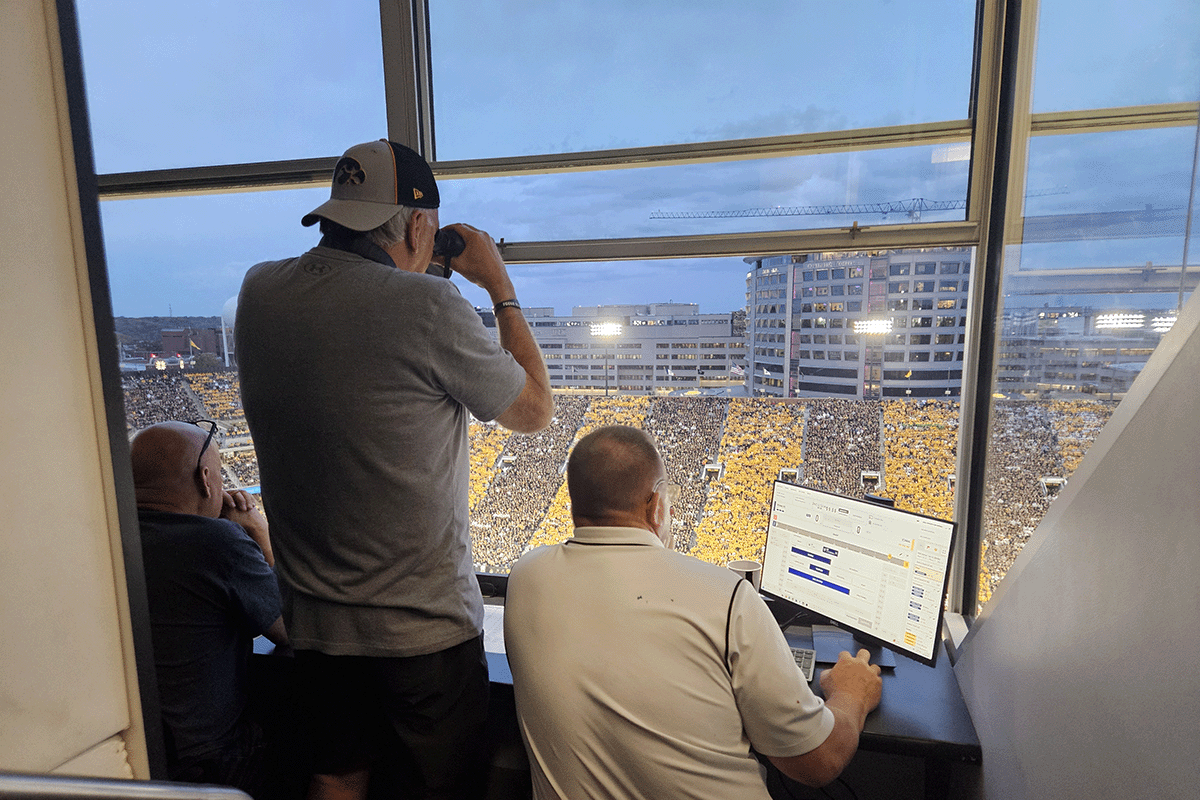 PHOTO: Tyler Strand
Scott Seagren (91BBA, 93MA), right, awaits information from spotters Ryan Haage (far left) and Jeff Duncan (84BA) before entering data from the play into a live stats program.
PHOTO: Tyler Strand
Scott Seagren (91BBA, 93MA), right, awaits information from spotters Ryan Haage (far left) and Jeff Duncan (84BA) before entering data from the play into a live stats program.
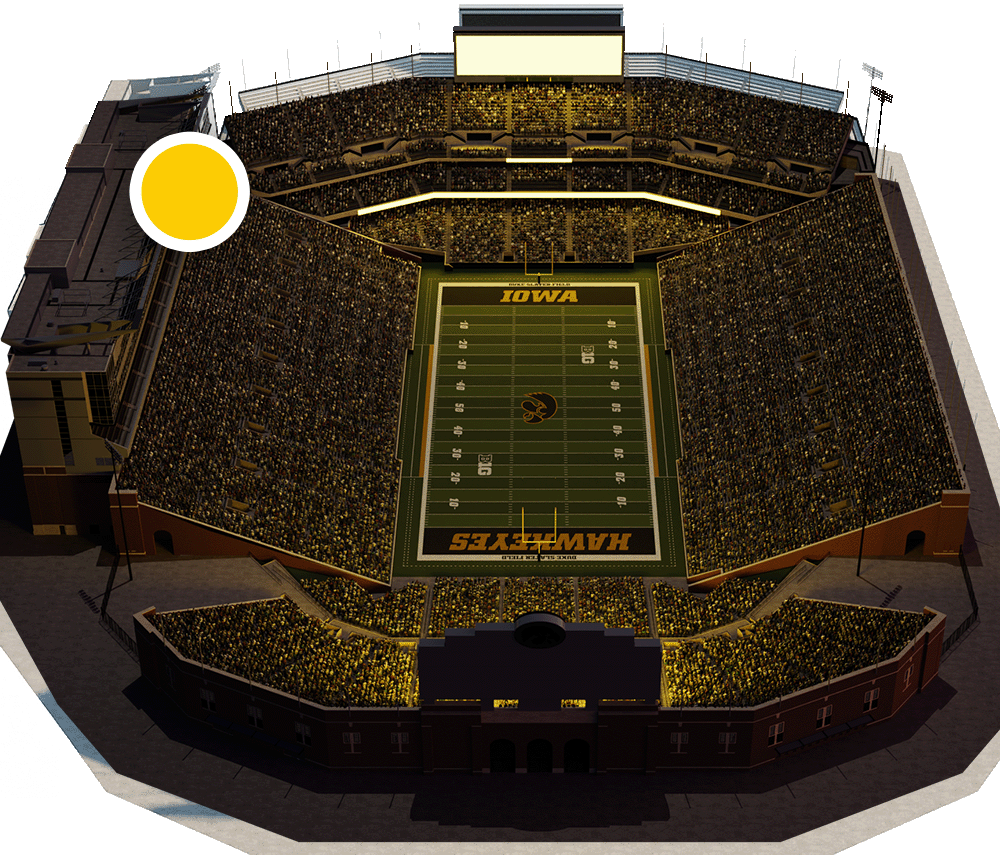
Moments before the ball is snapped at Kinnick Stadium, a spotter peers through a pair of binoculars from an open window on the fourth floor of the press box. This primary spotter observes the formation and relays short bits of information to his colleagues beside him to help them track the game’s stats as the Guns N’ Roses anthem “Welcome to the Jungle” blasts from the stadium’s sound system.
11’s the quarterback…28 is the back…
The music fades moments later, giving way to the low murmur of the crowd that anxiously awaits the snap.
Shotgun…
As the play unfolds, the primary spotter communicates the ball carrier’s number and the direction of the play or the passer and his target before announcing the tackler’s number. A backup spotter helps identify the tackler while a third spotter shares the number of yards gained, the official spot of the ball, and the time of the play. An internal public address announcer recites these stats to the media members down the hall. Meanwhile, a statistics recorder quickly enters the data for each play into a computer program that feeds the stats to the jumbotron, hawkeyesports.com, and the monitors of the game’s radio and TV broadcasters. These freelancers have worked together in the statistics booth for up to 25 years, efficiently relaying what happened on each play to media and fans.
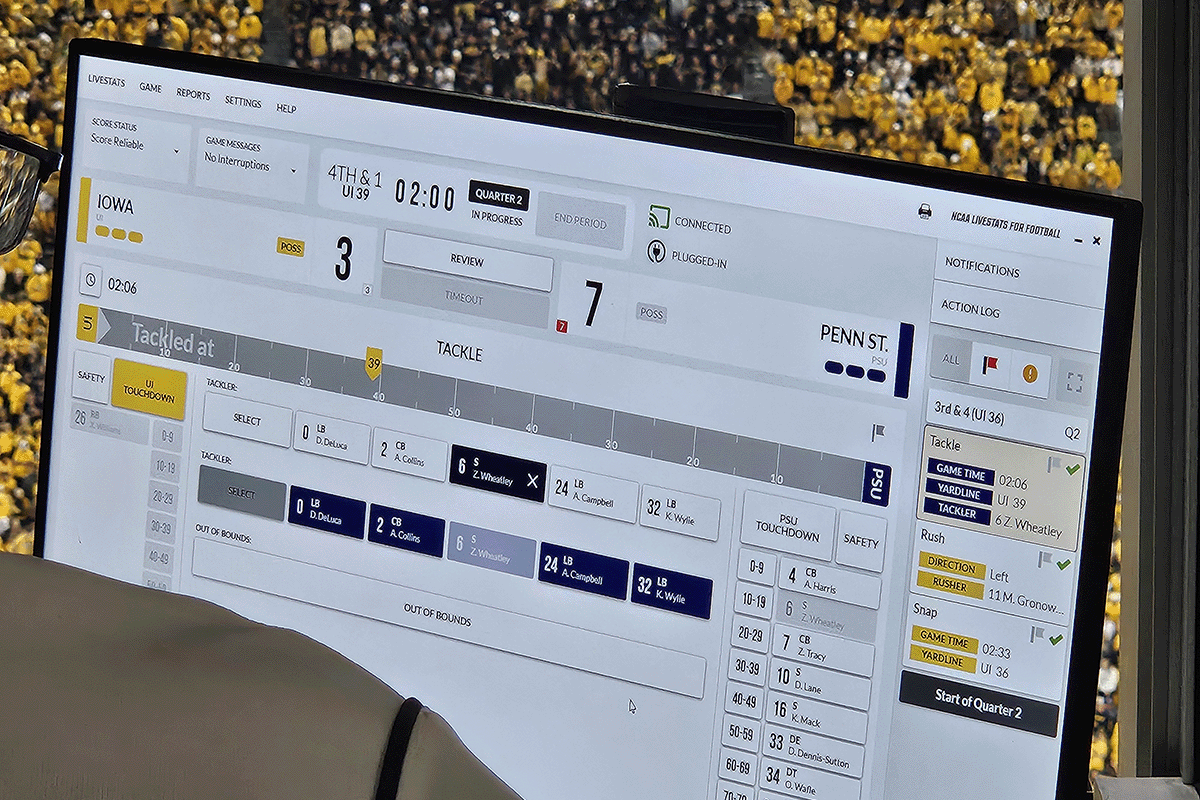 PHOTO: Tyler Strand
Scott Seagren has only a few seconds to enter the data for a play, clicking on player names and results throughout multiple screens. He is one of several freelancers in the statistics booth who have worked together for up to 25 years.
PHOTO: Tyler Strand
Scott Seagren has only a few seconds to enter the data for a play, clicking on player names and results throughout multiple screens. He is one of several freelancers in the statistics booth who have worked together for up to 25 years.
“The more complex, unique plays and penalties are the hardest things to enter into the program,” says Scott Seagren (91BBA, 93MA), who enters the data into NCAA LiveStats. For example, on a play with multiple turnovers or laterals, the staff must identify and record everyone who touched the ball, where they touched it, who tackled them and where, and then who advanced or recovered the ball and where for each change of possession.
More common challenges are determining who made the tackle in a pileup or whether a screen pass thrown parallel to the line of scrimmage is a forward pass or lateral that should be credited as a run. Often the team must make an initial call on the play and wait for the pile to unfold or the TV replay to reveal what actually happened. Says Seagren: “We all trust each other, and no one is offended if someone else helps them out or even corrects something.”
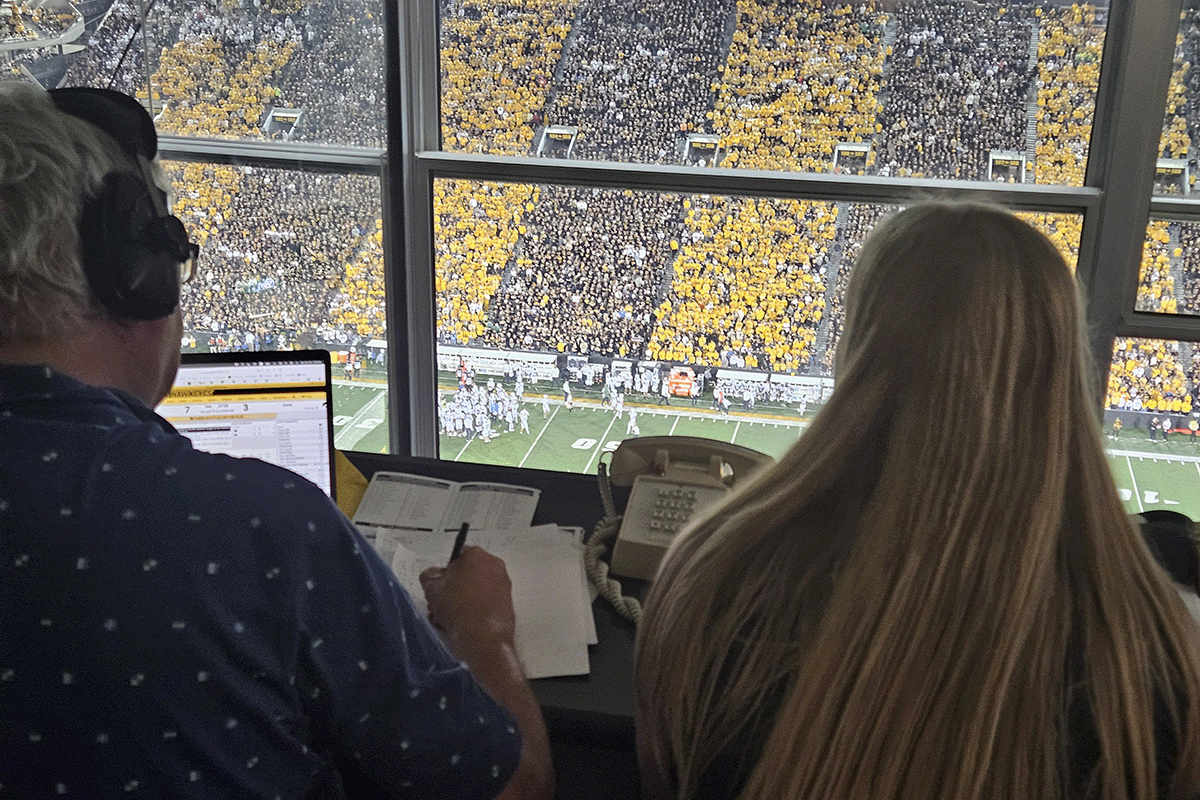 PHOTO: Tyler Strand
A TV representative, left, keeps his own statistics while also viewing the live stats entered by Seagren. A UI athletic communications liaison, at right, answers any phone calls on stat discrepancies.
PHOTO: Tyler Strand
A TV representative, left, keeps his own statistics while also viewing the live stats entered by Seagren. A UI athletic communications liaison, at right, answers any phone calls on stat discrepancies.
There’s a frequent echo behind them, where a representative for the game’s broadcast network repeats key stats via headset to the TV production truck outside the stadium. Equipped with their own pair of binoculars and a laptop to view the official stats, the broadcast network representative also relays details like the end zone a team has chosen to defend after the coin toss or in-game notes like “this is the second straight game [the quarterback] has thrown an interception” to inform the TV announcers and any graphics that may appear on the broadcast. A UI athletic communications liaison is positioned near the back of the room. They answer any phone calls on stat discrepancies or questions that may come from the sports information directors in the media area.
The stats booth offers a bird’s-eye view to watch a play unfold, and those inside it work diligently to keep everyone informed, whether they’re down the hall, in the stands, or on their couch.
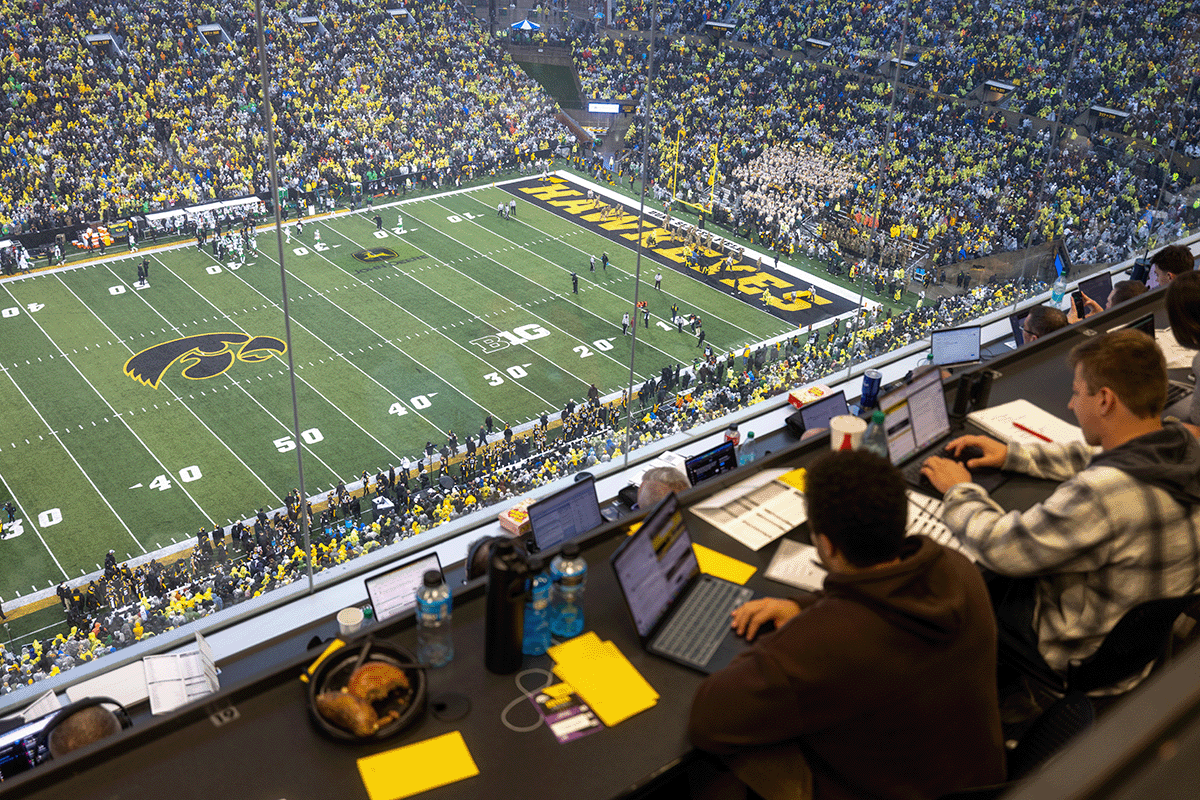 PHOTO: John Emigh
Down the hall, three rows of stadium-style seating accommodate approximately 125 media members and staff, including writers, radio personnel, NFL scouts, TV talent, and UI athletic communications. No cheering is allowed in this quiet workspace, where crowd noise is significantly reduced behind the windowpane. Key stats are relayed over the internal public address system, which is also piped into the restrooms on this floor. A concession area behind the media is stocked with bottled water, popcorn, and a full meal spread.
PHOTO: John Emigh
Down the hall, three rows of stadium-style seating accommodate approximately 125 media members and staff, including writers, radio personnel, NFL scouts, TV talent, and UI athletic communications. No cheering is allowed in this quiet workspace, where crowd noise is significantly reduced behind the windowpane. Key stats are relayed over the internal public address system, which is also piped into the restrooms on this floor. A concession area behind the media is stocked with bottled water, popcorn, and a full meal spread.
KINNICK GAMEDAY