
Student Managers Serve Essential Role on Iowa Football Team
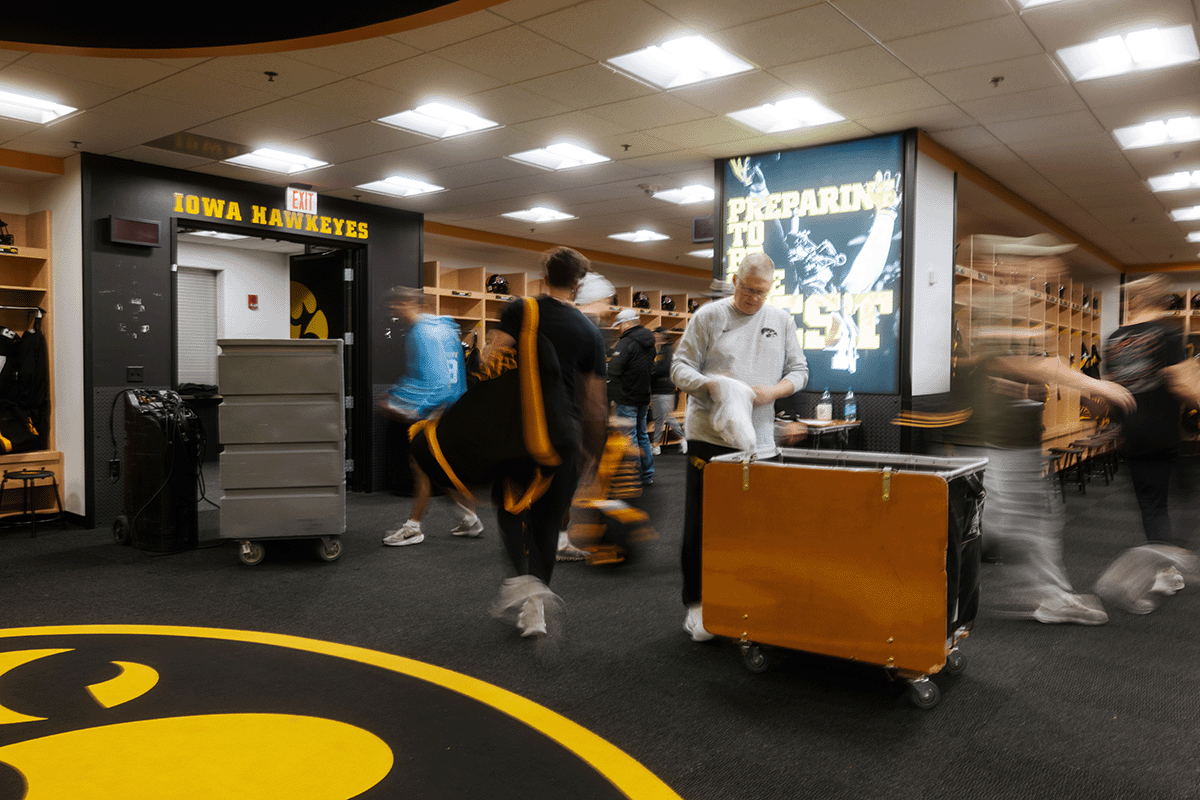 PHOTO: Caleb Saunders
The Hawkeye locker room is in constant motion about 48 hours before kickoff.
PHOTO: Caleb Saunders
The Hawkeye locker room is in constant motion about 48 hours before kickoff.
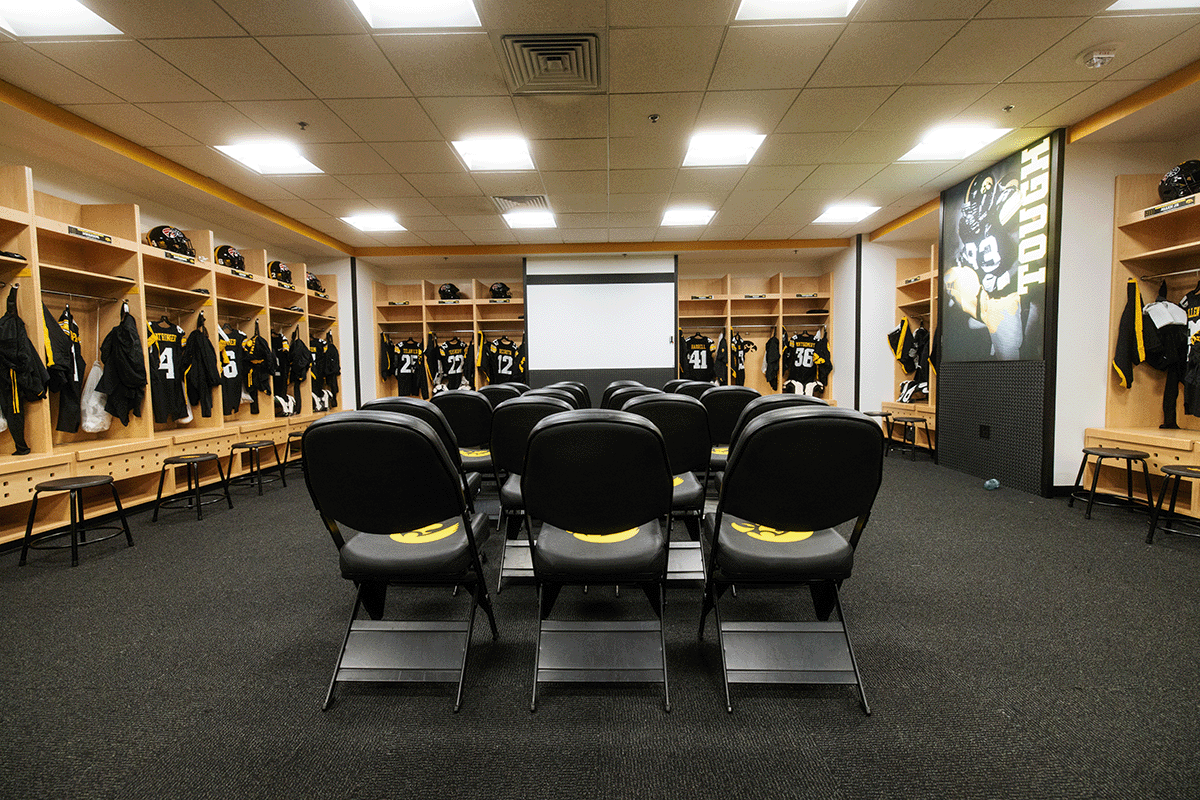
It’s two days before kickoff at Kinnick Stadium, and the Iowa football locker room is almost ready for game day. Several of the team’s 12 student managers work alongside equipment staff, removing shoulder pads and cleats from duffel bags and placing them in each locker. Others hang freshly laundered pregame warmup shorts, T-shirts, and lightweight hoodies along with in-game compression shirts, socks, and padded girdles. Numbered loops connecting the items help identify each player’s apparel after washing.
Jerseys are hung in the middle of each locker with the name facing out before pants are placed on a hook to the left. Each helmet rests at the top of the locker, above the name plate, and faces right—a standard that legendary football coach Hayden Fry established so that the America Needs Farmers sticker is visible.
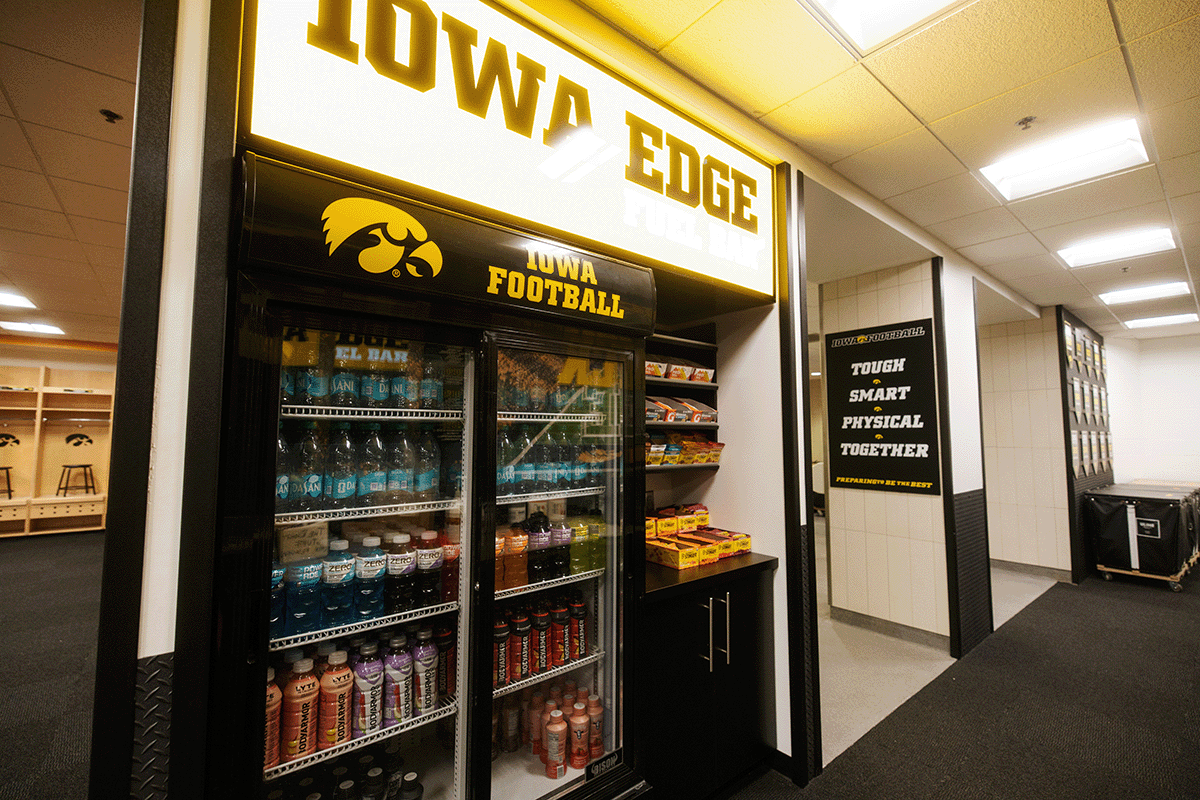 PHOTO: Caleb Saunders
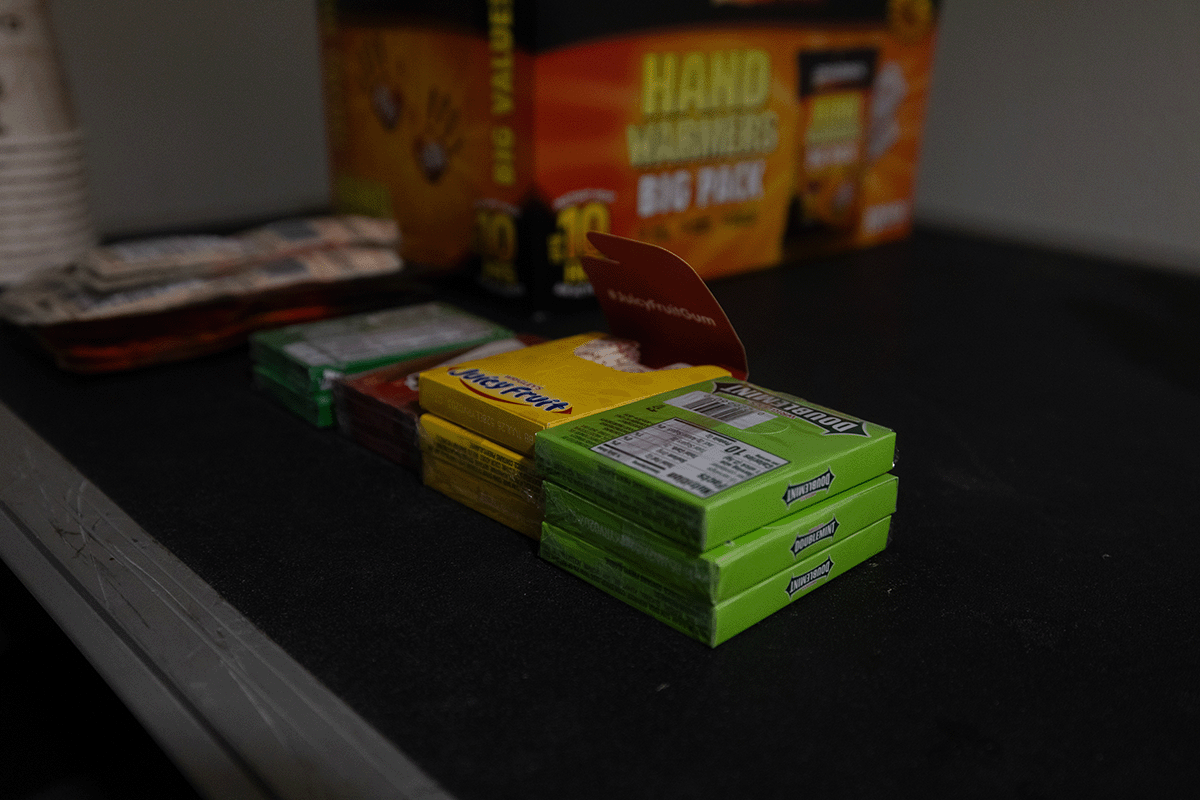
One of the student managers’ first tasks each morning is stocking each refuel station, including this one in the Hawkeye locker room, with nutrient-dense foods and beverages. These stations offer players options to aid recovery.
PHOTO: Caleb Saunders
One of the student managers’ first tasks each morning is stocking each refuel station, including this one in the Hawkeye locker room, with nutrient-dense foods and beverages. These stations offer players options to aid recovery.
As up to more than 100 lockers are prepared for each home game, another student manager restocks snacks and drinks in the refuel stations throughout Kinnick Stadium and the Stew and LeNore Hansen Football Performance Center. These Thursday morning responsibilities are just a fraction of the duties the student managers complete in a busy seven-day work week supporting Hawkeye football.
“[They’re] the backbone of our team, because they probably do more work than anybody in this entire organization when it comes to having things ready,” says Kelly Koch, the team’s former assistant equipment manager. “They do a tremendous amount of work; we couldn’t do it without them.”
Making the Grade
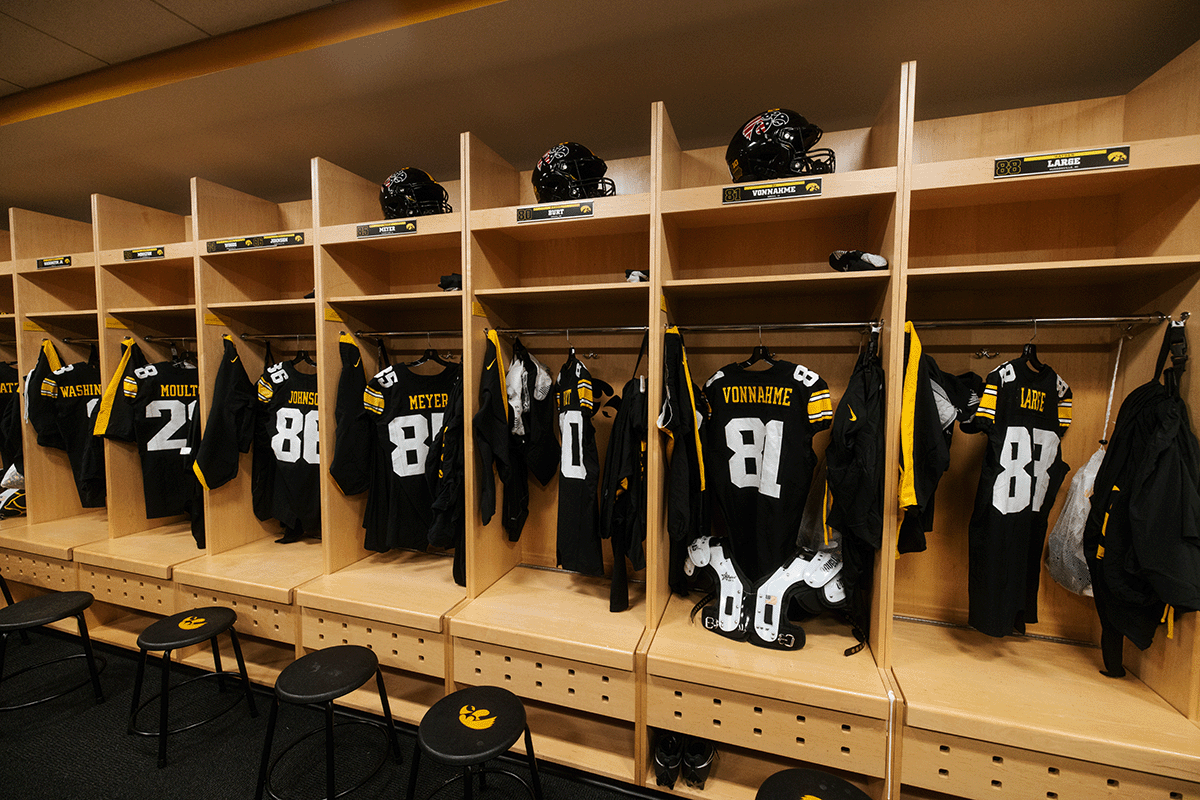 PHOTO: Caleb Saunders
Every item has a designated spot within a locker. The helmets always rest on the top shelf and face right, a directive by former Hawkeye football coach Hayden Fry so that the America Needs Farmers decal is visible.
PHOTO: Caleb Saunders
Every item has a designated spot within a locker. The helmets always rest on the top shelf and face right, a directive by former Hawkeye football coach Hayden Fry so that the America Needs Farmers decal is visible.
Most student managers have already completed at least one year of college before joining the team, with tryouts held each spring. If they make the cut, they’re offered early registration so they can schedule their classes between 11 a.m. to 5 p.m., allowing them to meet their morning and evening responsibilities for the team. Handling a heavy workload, they take advantage of downtime during team meals or flying to away games to complete their homework. When a student has a test or big project, others step up in their absence.
For many of these students, serving on the Iowa football team is a way to remain involved with the sport without being a Division I athlete, or to gain experience for a career in football operations. “I knew I wasn’t going to be playing on the field, but I felt that I had a purpose in helping out on the sidelines and still helping the team win,” says Elio Celentino (25BBA, 25BS), who was graduate assistant head football manager for operations last season.
Click to enlarge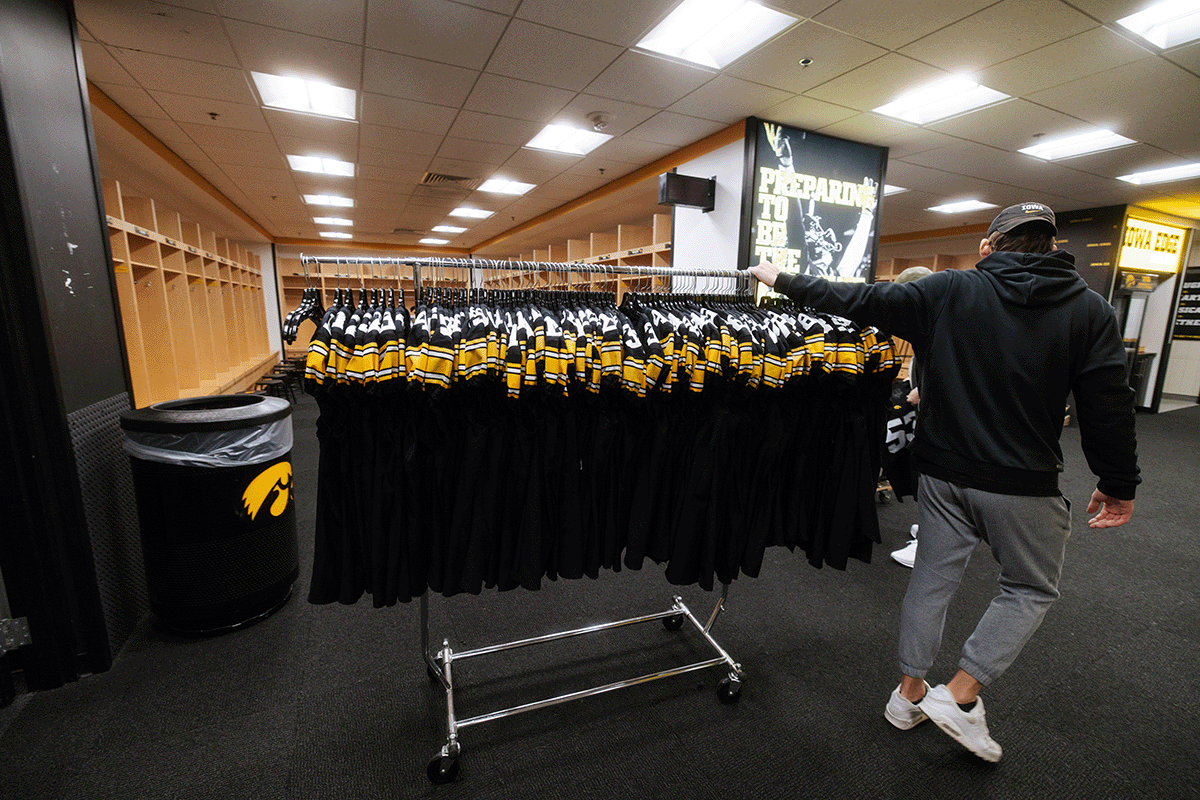
Celentino was one of the team’s co-head managers who work additional hours each week and mentor other student managers. Any manager can attend football operations meetings to gain more knowledge about the field, and the program has served as a training ground for many who have gone on to football operations careers in college and the NFL.
Practice to Game Day
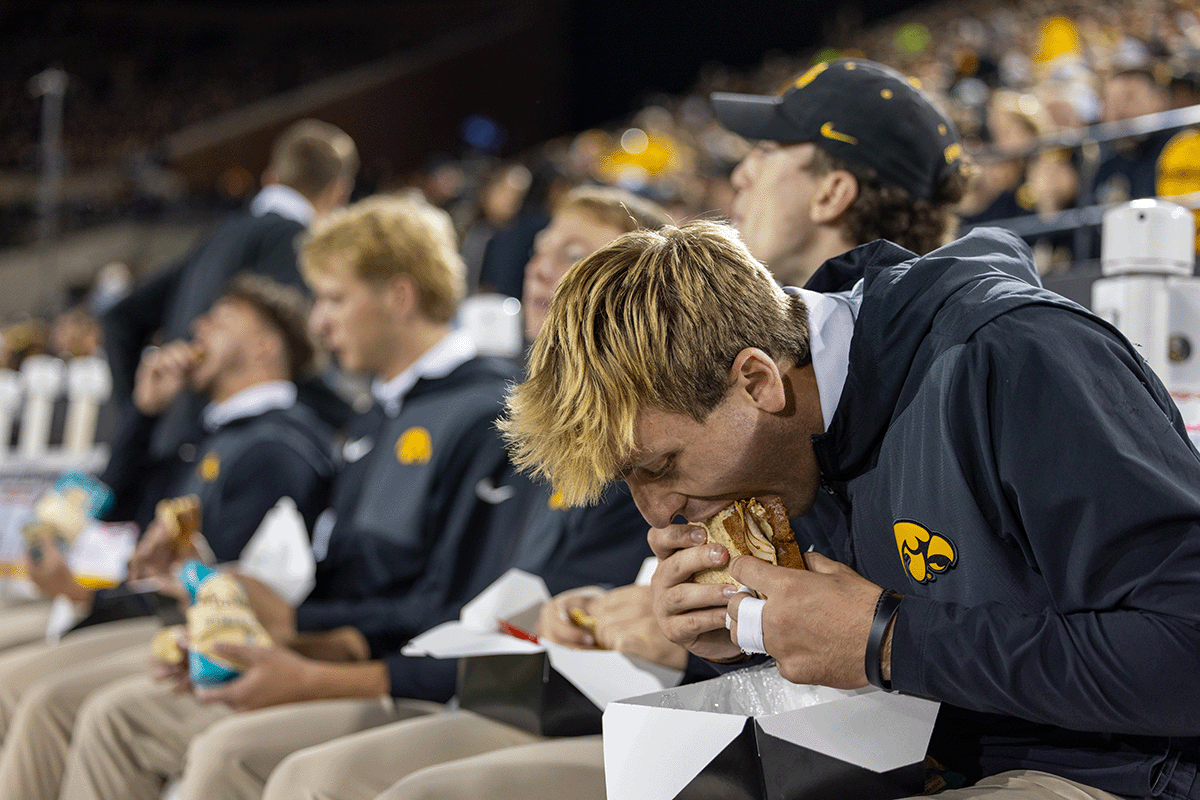 PHOTO: John Emigh
The Iowa football team’s student managers take advantage of a brief break from their game day duties to curb their hunger. During the season, these indispensable staff members work extensive hours each week, serving many of the team’s needs for each practice and game. They are paid a partial scholarship.
PHOTO: John Emigh
The Iowa football team’s student managers take advantage of a brief break from their game day duties to curb their hunger. During the season, these indispensable staff members work extensive hours each week, serving many of the team’s needs for each practice and game. They are paid a partial scholarship.
Practices are the main priority for the student managers, who are each responsible for a specific position group. They’re the first ones to the practice field, assembling equipment for drills that they help oversee while also running the clock for different practice periods. During scrimmages, they act as refs and the chain gang, spotting the ball and moving the first-down markers. “Anything that a player doesn’t do during practice, that’s our job—to make practice go,” says Celentino.
The student managers are also the last to leave. After practice ends, they operate the JUGS machine—a portable, motorized device that throws passes—for the wide receivers and retrieve balls for the quarterbacks getting in extra throws.
On game day, managers set up headset communications for coaches in the press box and on the field. They warm up the quarterbacks and help the starter determine which ball they want to use first in the game. Four managers serve as ball boys, with two on each sideline, ready to provide the ball to the official or recoup one after a field goal or extra point. Other students chart plays by recording the formation and result of each snap. Some managers stand right next to a position coach to hear which coverage they yell, while others wear a headset to hear the play call.
All managers travel for each road game, arriving first to load the team truck before boarding the plane last. Upon arrival, the managers hustle to arrange the equipment and gear for all 74 traveling players in the visiting locker room, while the rest of the team heads to a hotel for dinner. The managers also reload the truck after the game and unload it once they return to Iowa City.
Student Manager Traditions
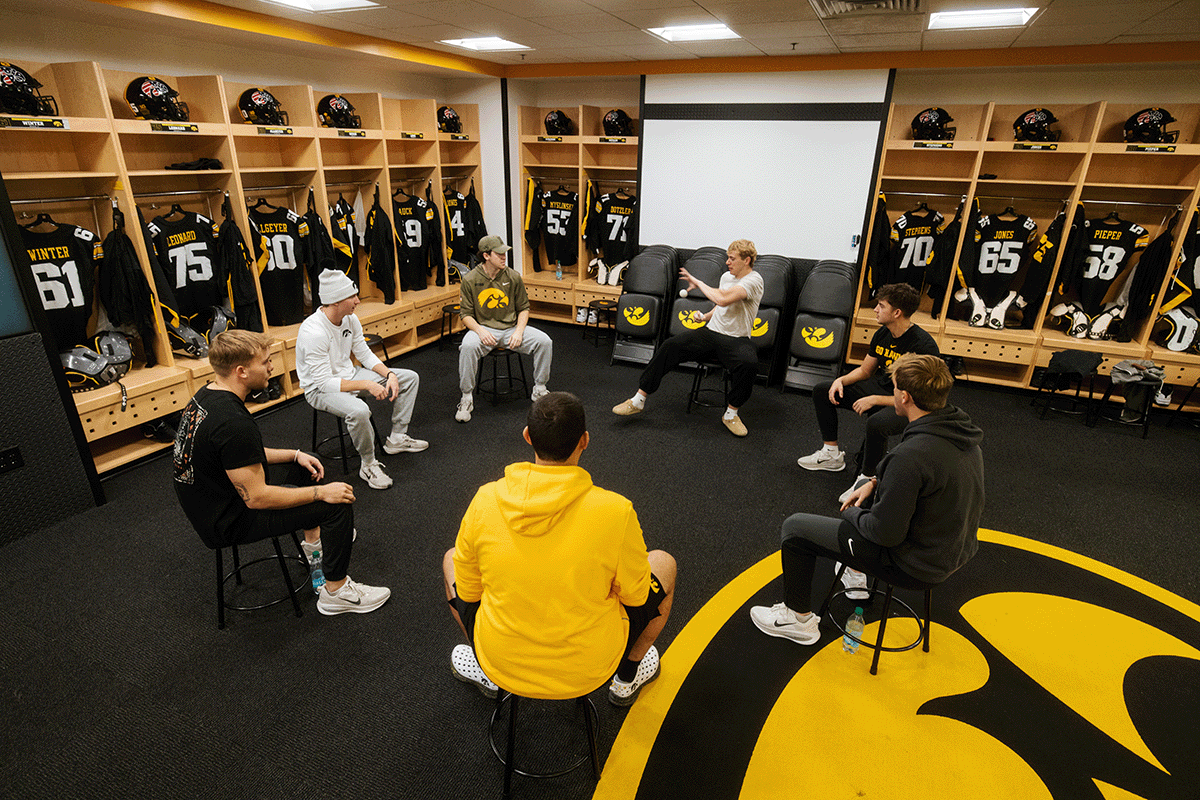 PHOTO: Caleb Saunders
When the locker room is fully prepared and the student managers have a few spare minutes, they circle around in chairs for a game of two-ball. Two tennis-sized balls are bounced between the group at random with each manager required to bounce the ball toward another person within a split second. It’s another way this dedicated crew builds chemistry and unwinds before their next task beckons.
PHOTO: Caleb Saunders
When the locker room is fully prepared and the student managers have a few spare minutes, they circle around in chairs for a game of two-ball. Two tennis-sized balls are bounced between the group at random with each manager required to bounce the ball toward another person within a split second. It’s another way this dedicated crew builds chemistry and unwinds before their next task beckons.
The student managers also practice weekly to prepare for their annual eight-on-eight flag football game against Wisconsin’s student managers, which is played the night before the Hawkeyes and Badgers meet on the gridiron. The tradition dates to 1991, but was skipped for a few years due to bad blood between the programs before resuming in 1995. The student managers take this game just as seriously as their team duties, drawing up plays they reference from their wrist cards and designing their own defenses while competing for the traveling Rusty Toolbox trophy. Iowa leads the all-time series 16-13 and has won five of the last six games.
Celentino, who played on the line, uses air quotes for the “flag” in flag football, noting the physicality of each game, which features three offensive linemen against two defensive linemen. “We’re hitting each other, we’re wearing mouth guards and getting popped,” says Celentino. “One of our guys had to sit out the game because he got a concussion.”
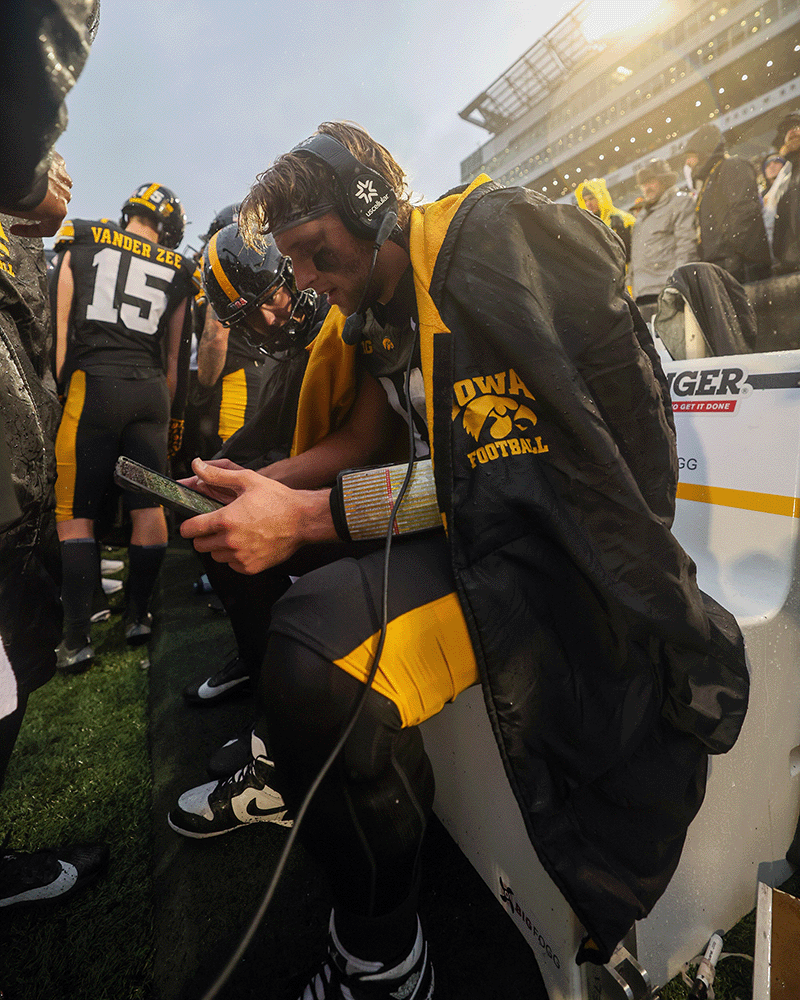 PHOTO: Owen Aanestad/HAWKEYESPORTS.COM
After a possession, players review video of the previous series of plays on iPads and communicate via headset with a position coach in the press box. Each play is reviewable with sideline, end zone, and telecast camera views less than a minute after it happens. The Big Ten introduced the use of iPads in the 2024 football season, following an NCAA ruling that allows each team to use up to 18 active tablets during a game.
PHOTO: Owen Aanestad/HAWKEYESPORTS.COM
After a possession, players review video of the previous series of plays on iPads and communicate via headset with a position coach in the press box. Each play is reviewable with sideline, end zone, and telecast camera views less than a minute after it happens. The Big Ten introduced the use of iPads in the 2024 football season, following an NCAA ruling that allows each team to use up to 18 active tablets during a game.
Each year, former student managers from as far back as the 1970s return for an alumni event and share memorable stories from their time serving on the Iowa football team and where it’s led them in their careers. Celentino, who plans to continue working in football operations at the collegiate or professional level, says the alumni all share a fondness for their time on the team and the connections they built with one another. “It’s a special bond you get because we spend a ridiculous amount of time with each other,” he says. “We’re all friends and brothers, and you bicker sometimes, but that’s what a brotherhood is. That’s what the Iowa football managers are.”
KINNICK GAMEDAY
How to Outfit a Big Ten College Football Team
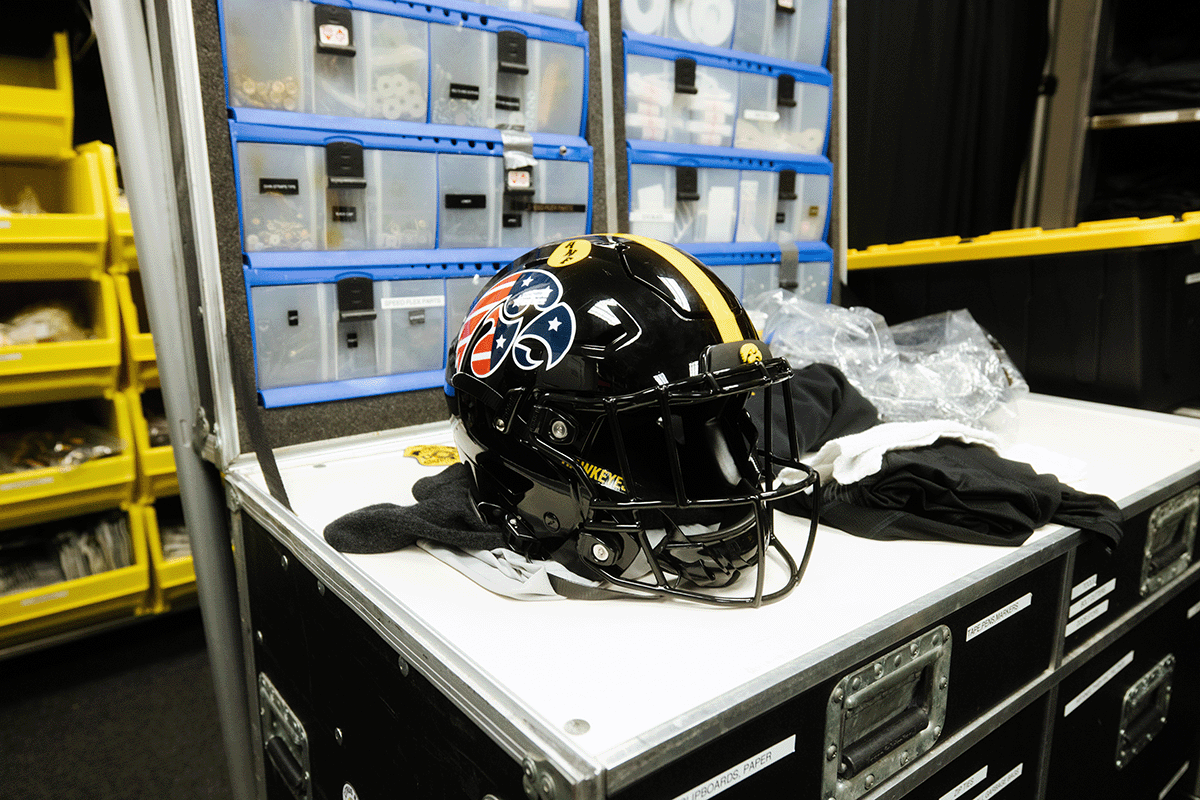 PHOTO: Caleb Saunders
Student equipment managers help ensure each helmet is in pristine condition for Saturday. For the Military Appreciation Game, students place an American flag Tigerhawk decal on the right side of the helmets.
PHOTO: Caleb Saunders
Student equipment managers help ensure each helmet is in pristine condition for Saturday. For the Military Appreciation Game, students place an American flag Tigerhawk decal on the right side of the helmets.
Four student workers on the equipment staff ensure the apparel for each player and coach is ready for game day and washed and dried soon after. They wax and paint each helmet before the season and replace damaged face masks, touch up small dents or scratches, and apply and replace decals throughout the year.
Sometimes, they’ll work on 10 to 15 helmets in one day, taking them apart to replace the face mask and making sure each decal from the gold center stripe to the Big Ten logo on the back is properly aligned. “We make sure they look absolutely perfect for a game,” says Ashley Stinocher (25BS), a student equipment manager last season, who is pursuing a graduate degree at Iowa and plans to work in football administration and operations at the collegiate or professional level. “We’re constantly looking at them.”
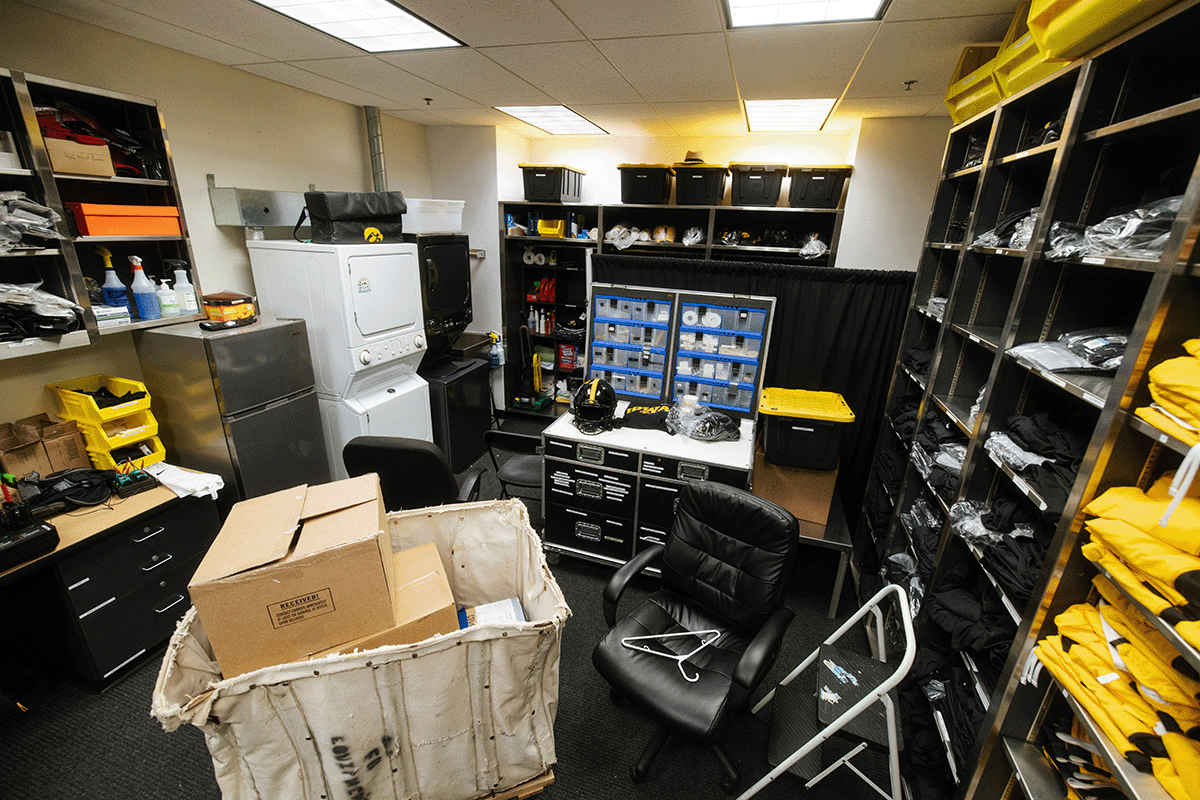 PHOTO: Caleb Saunders
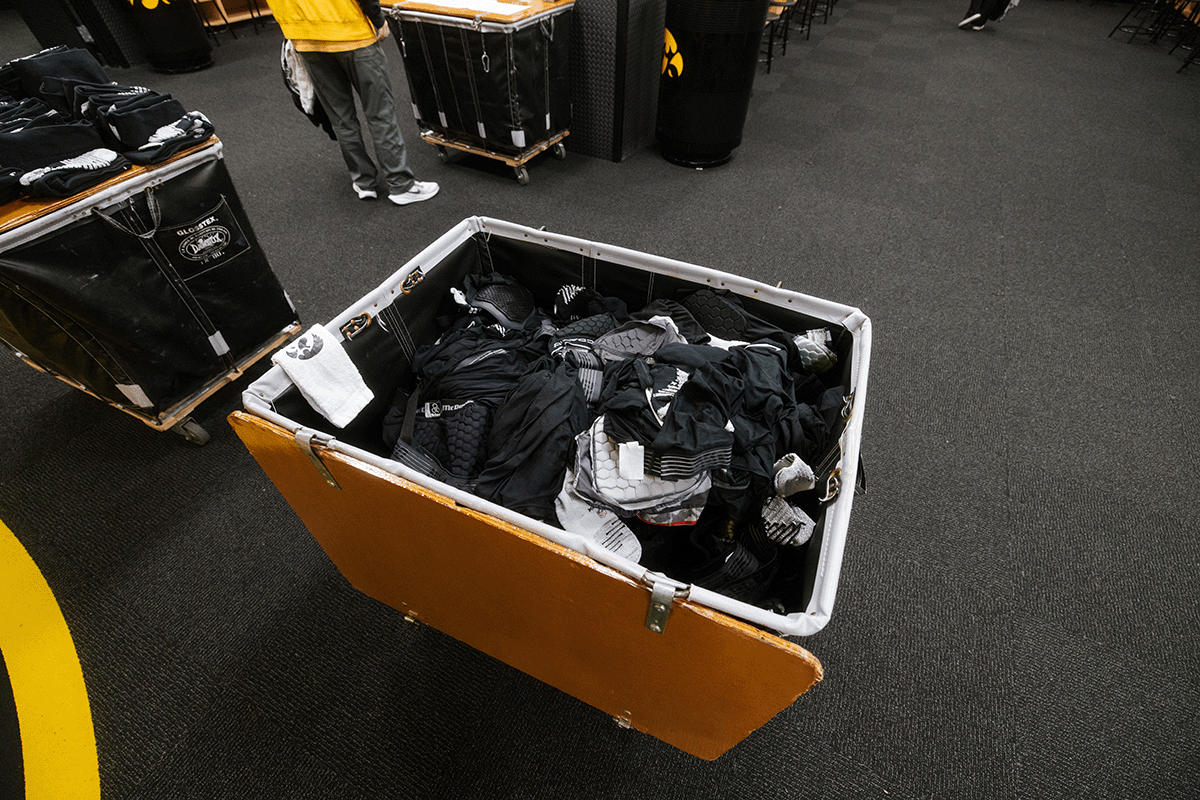
From gloves and girdles to bicep bands and compression sleeves, an equipment room across from the Hawkeye locker room is fully stocked and available to players.
PHOTO: Caleb Saunders
From gloves and girdles to bicep bands and compression sleeves, an equipment room across from the Hawkeye locker room is fully stocked and available to players.
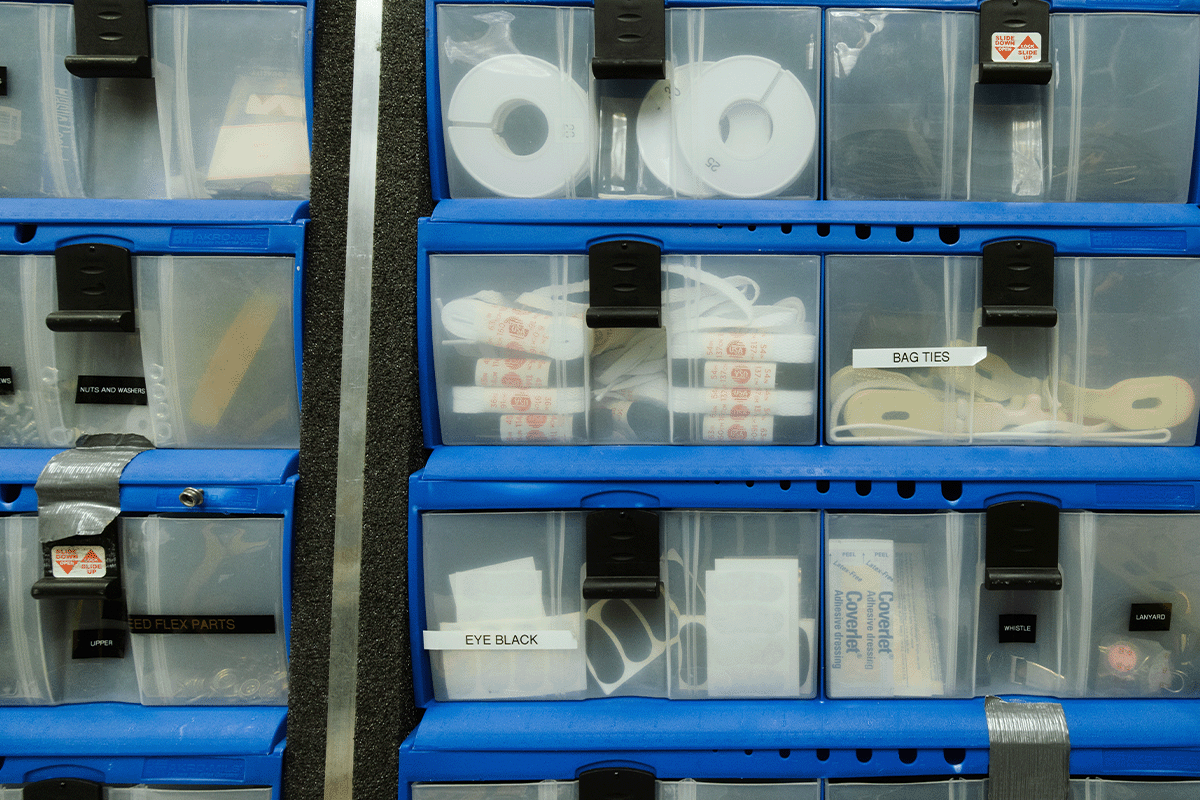
For special recognitions like the Military Appreciation Game, the students place an American flag Tigerhawk decal on the right side of the helmets. The students on the equipment staff work up to 20 hours a week when classes are in session and help players with any apparel needs at an equipment check the day before each game. This practice takes on extra importance when the Hawkeyes wear alternate uniforms or if inclement weather is expected on game day. An equipment supply room across the hall from the Hawkeye locker room is fully stocked with everything from gloves and bicep bands to tights and compression sleeves and remains open throughout game day in case anyone needs to rush over for a replacement. During the game, equipment staff patrol the sidelines with extra jerseys, pants, helmets, and helmet parts on hand.
Click to enlarge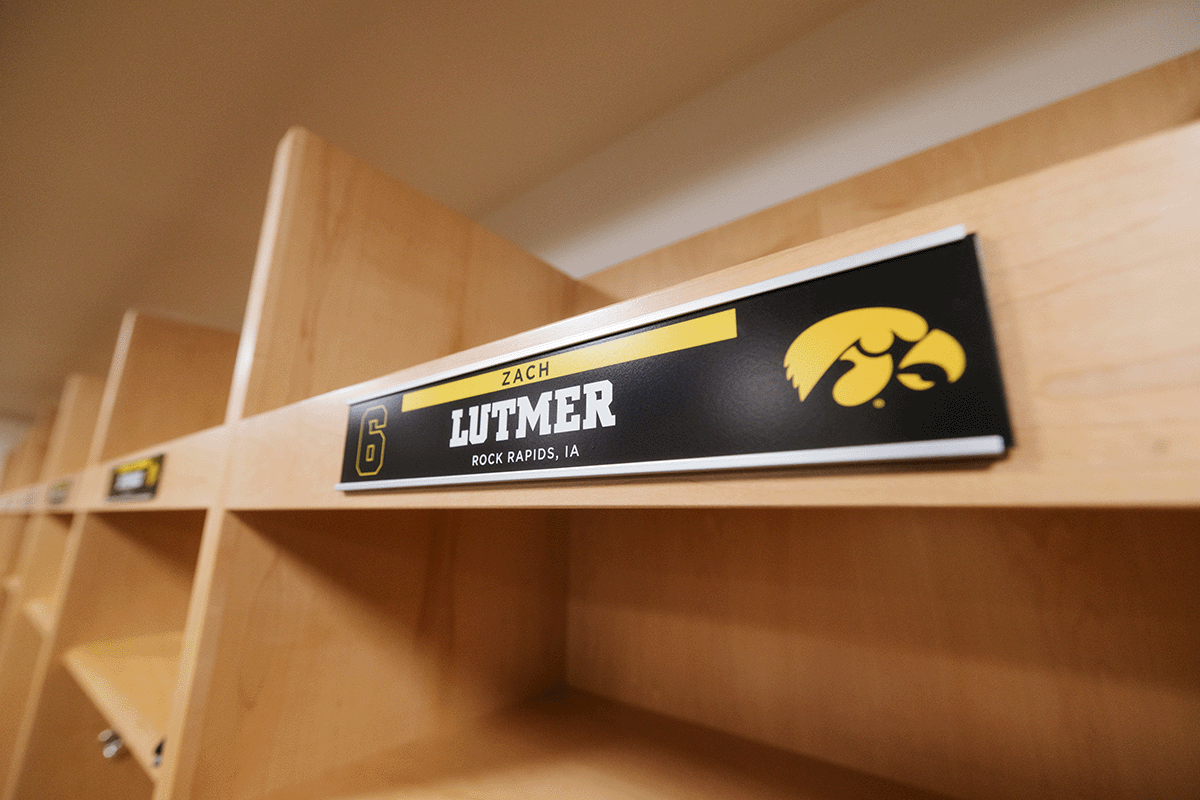
Once the team’s apparel is placed in laundry bins following a game, the student workers sort the gear and wash jerseys and pants first in four industrial-sized washers before moving to other clothes, towels, and coaches apparel. They use a premeasured detergent mix from large barrels that also contain bleach and a chemical that can remove any dyes or adhesive stains. A disinfectant spray that eliminates odor is applied to pads and helmets. Jerseys are dried on hangers, while pants and other items are dried separately in four industrial dryers. Any last loads of wash on Saturday are set for an overnight soak, so they aren’t sitting long before the rest of the laundry is dried Sunday morning.