
Marilyn Monroe Photos Featured in New Book by Workshop Grad
 PHOTOS: BERNARD OF HOLLYWOOD FOUNDATION
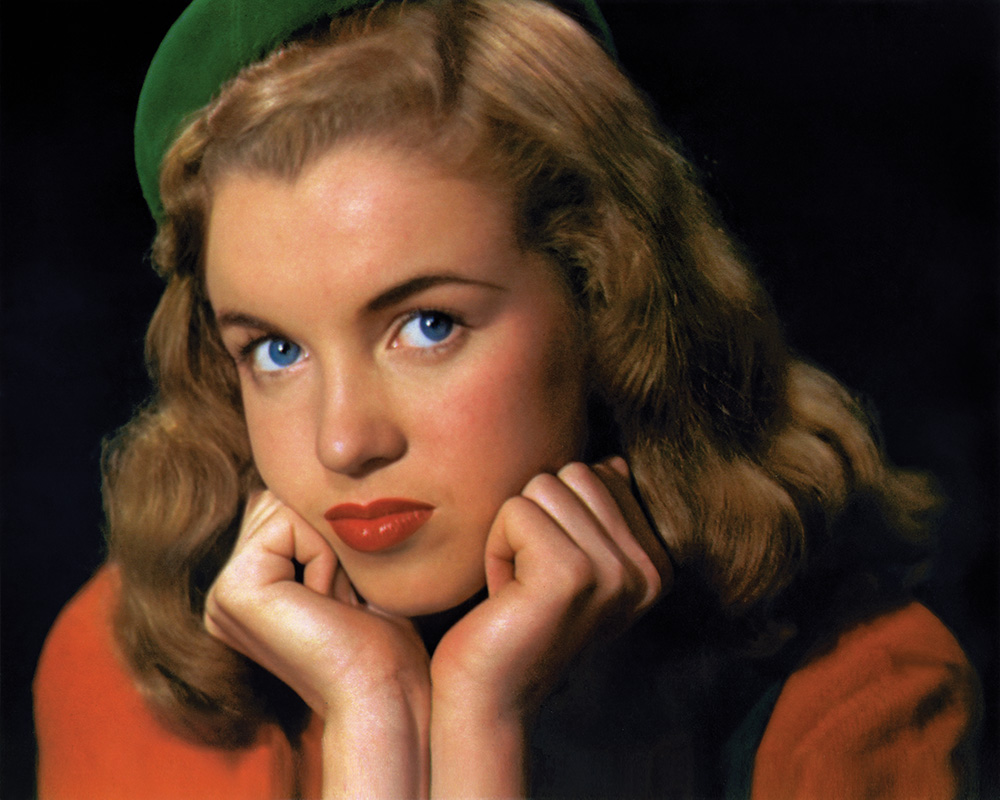
A new book by Iowa Writers' Workshop graduate Joshua J. Miller highlights the transformation of model Norma Jeane Dougherty (pictured here in 1946) into Hollywood legend Marilyn Monroe.
PHOTOS: BERNARD OF HOLLYWOOD FOUNDATION
A new book by Iowa Writers' Workshop graduate Joshua J. Miller highlights the transformation of model Norma Jeane Dougherty (pictured here in 1946) into Hollywood legend Marilyn Monroe.
Earlier this year, Iowa Writers’ Workshop alum Joshua J. Miller (03MFA) and his partner, M.A. Fortin, released The Marilyn Monroe Century—a story about the iconic celebrity’s rise to fame. The visual biography highlights photos and diary entries from Bruno Bernard, who was Miller’s grandfather and the photographer who helped make Monroe a star.
In a candid conversation, Miller shares his motivation for writing the book, his takeaways from the Iowa Writers’ Workshop, and his love for the University of Iowa.
How would you describe your grandfather, Bruno Bernard, who is best known for his photographs of Marilyn Monroe?
He was very German, but also a Berliner from the ’30s. He was hyper-educated, spoke multiple languages, an academic with multiple degrees—one of those impressive people that you go, “Can I ever live up to this kind of stature?”
He passed away when I was 15, but it was a very intense, wonderful, inspiring relationship. When I was 12, he took me to Marilyn Monroe’s crypt to have me take a picture of him. I knew he had a relationship with her, but I did not know the scale and complexities of these two orphans who found each other. He opened the door to a lot of strange and wonderful things for me.
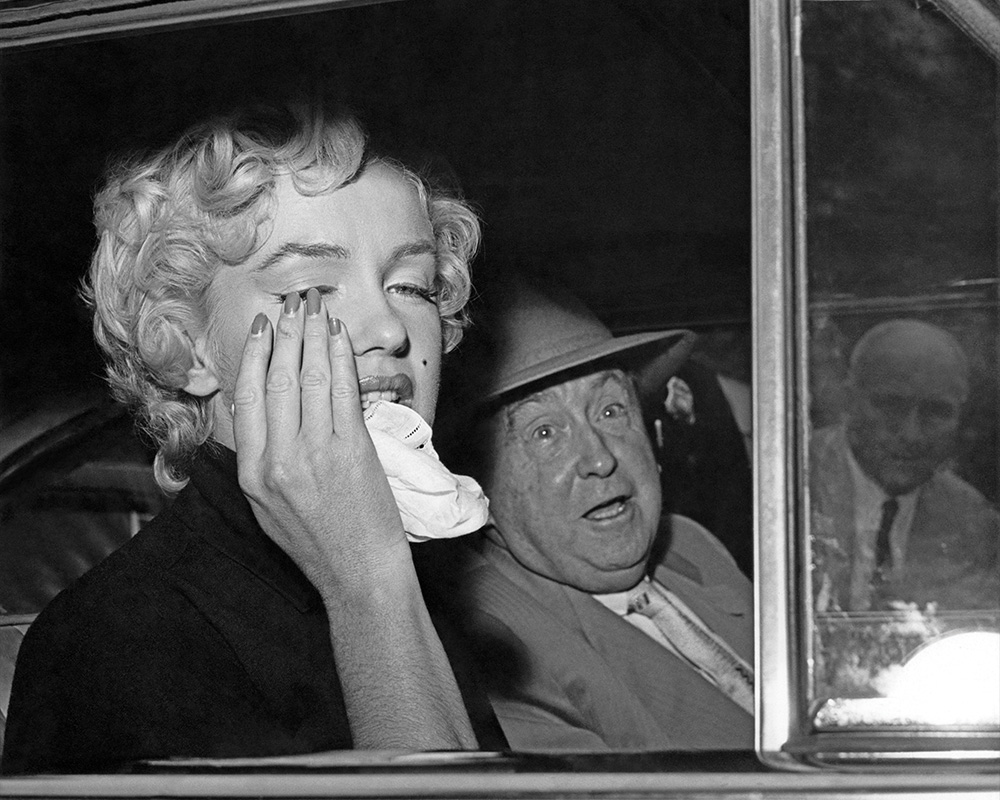 In 1954, photographer Bruno Bernard captured this image of Marilyn Monroe and attorney Jerry Giesler as she filed for divorce from baseball star Joe DiMaggio.
What did you learn from your grandfather that helped inform the book?
He helped me understand glamour in a different way. In his mind, glamour was education, intellect. It was being able to not just dress beautifully and look beautiful but walk into a room and know how to engage people in a way that was captivating and galvanizing. Glamour was power and agency, not an Instagram post.
Marilyn would have celebrated her 100th birthday in June. Beyond that milestone, why did you decide to debut The Marilyn Monroe Century now?
I had a really bad breakup. I think if you are heartbroken, you have got to write. Pain is motivation. Anything you write probably comes from cataclysm in your life if it is going to be of value. I had also moved to a new country, France, and I wanted a way to write about home again.
I think I finally had enough distance to write about Marilyn and my grandfather. I had always avoided it. I thought it was kitschy at times; I thought it was overexposed; I thought it was something that haunted my family in a really painful way. I realized the only way out was the way through.
I decided to write the story with my partner about friendship, about alternative families, about how we find these people when we have lost our families. After my mom, [actor] Susan Bernard, died in 2019, I paralleled that to my grandfather having to leave Germany, his homeland. I lost my motherland when my mom died; my grandfather had to come to America to reinvent himself. I think the only way you can survive something that traumatizing is to completely rebuild a new world. I wanted to understand him, how he did it, because I was doing the same thing in Europe.
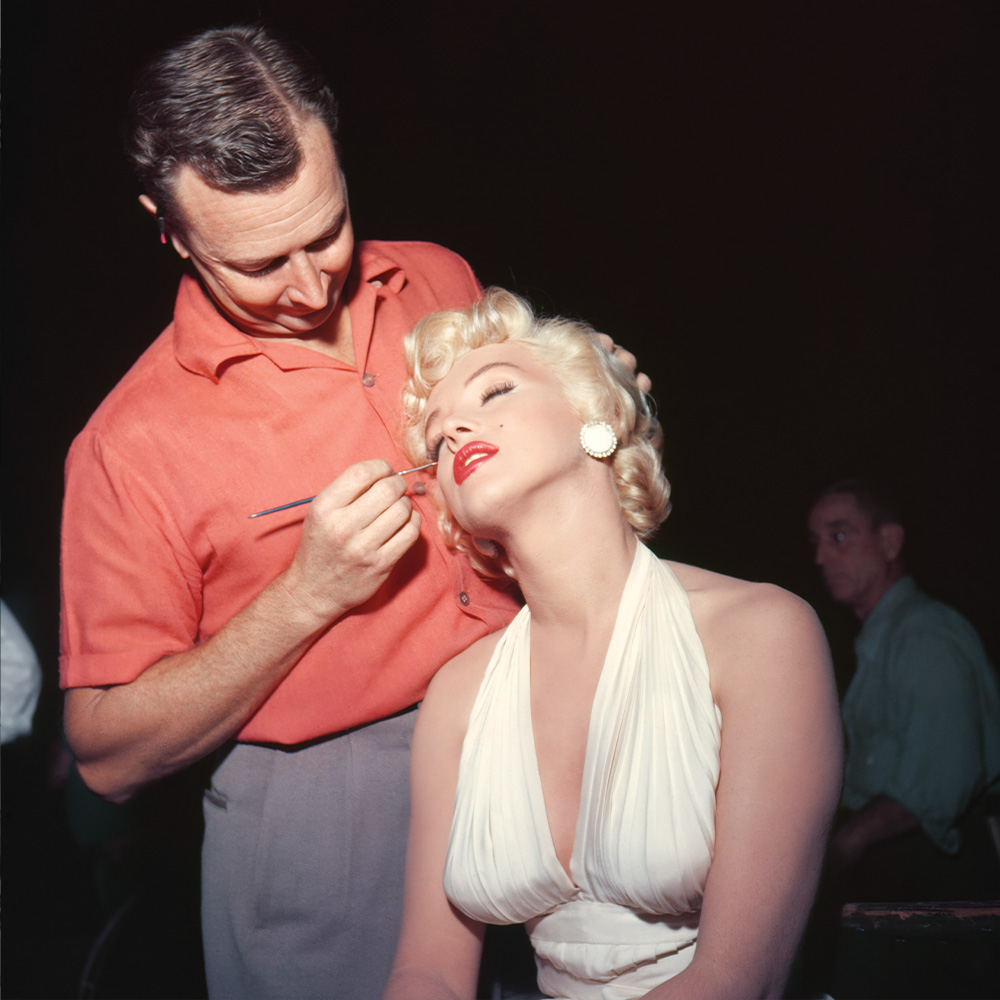 Joshua J. Miller's grandfather, Bruno Bernard, photographed makeup artist Whitey Snyder applying Marilyn Monroe's makeup in 1954 on the set of The Seven-Year Itch.
If readers take one thing away from The Marilyn Monroe Century, what do you hope it would be?
When you write about someone with such mythos around them, you forget that they are real—that it really happened. I think we forget that Marilyn is not a commodity and a brand: She is a human.
I hope people see her—not the persona, not the tragedy, not the brand, not the business commodity, not any of that. I hope people read a story about the girl next door who got discovered by my grandfather.
My grandfather and Marilyn never had a romantic relationship. There was a big age gap between them; she was 19, and he was 33. There was romantic tension, but he wanted to be her mentor, her big brother, and nothing else. That camaraderie is very special.
And that brings me back to Iowa and the idea that art is not created in a vacuum. You need support; you need teachers.
What did you take away from the Iowa Writers’ Workshop that continues to inform your work today?
The late [Iowa Writers’ Workshop administrative assistant] Connie Brothers said, “You can do anything, Josh. We have the patience for you—you just have to focus.”
I have too many interests, so I cannot sacrifice something good while focusing on too many things at once. I learned you cannot be the little prince and be a novelist on a private planet—you need your community of writers; you need to be in communication with other novelists; you need to have that osmosis that challenges you to go past your cliches and boring ideas.
I think a lot of people may go into the workshop ambitious. I think you should have no ambition going into the workshop. I think you should go there to study craft. I wish I had said that to myself at the time, because I was set on getting out of there with another novel published.
[Workshop professor] Marilynne Robinson (17LHD) was always trying to slow me down. She would say, “Stop thinking about the results or what you want this book to be. The book will tell you what it wants to be.”
What I learned from the workshop is that your voice will only come forth years afterwards. You must metabolize all that information, all the failures, all the victories, all the mortifying critiques that you have in front of your peers. The mortification of walking to the Fox Head afterwards, and people kind of look at you like you have got the scarlet letter, and you slink into the back booth. You almost need that reckoning of people terrifying you into paralysis. You need all of that to gut yourself and find it years later.
What is a moment that stands out to you from your time in the workshop?
I remember sitting with Marilynne Robinson, my thesis advisor, at the workshop. I wanted her to see me, and I fought for her attention. I felt I had some incredible sessions, but there were a couple of them where she said some pretty profound things to me.
I was trying to write a memoir in an ambitious rush, and she said to me, “You have not had enough time between the event and now to write about it with the reconsideration that the work needs.”
I was so desperate to make sense of the event that had happened that I needed to get it out. But it was too soon to tell those stories. Some stories need to breathe, maybe for decades.
What does the University of Iowa mean to you?
To me, Iowa was the most glamorous place, because it was a counterpoint to everything I knew. Los Angeles, New York, Paris: I knew all the cosmopolitan cities in the world, but going to the heartland was like me going to the Amazon. It was a different culture, a different world, not to mention Iowa has some of the most intelligent writers in the world per capita. I found a home there.
You do not go to Iowa because you fit in everywhere else and you have a perfect, structured life; you go there to hopefully find your new family. Everyone in a figurative and literal way is kind of orphaned. My friendships and the people I have known from there are people I will know hopefully until the day I die.
As a queer person, I was ostracized in different ways from different communities because of my sexuality. It was not easy being one of the few openly queer people at Iowa. I had to go find my groups out there.
But I believe [current workshop director] Lan Samantha Chang (93MFA) has completely revolutionized the workshop. It feels like there are voices from everywhere now. It must be really exciting to be there right now. I know there is some incredible work being done.
You have donated to the Iowa Writers’ Workshop, including creating the Susan Bernard Fund in Fiction to support students. Why do you choose to give back to Iowa?
You never forget your first love. I fell in love with Iowa City. I get emotional just talking about it.
My father, [playwright and actor] Jason Miller, had just died in 2001. Connie Brothers was like my den mother. [Workshop director] Frank Conroy became my wild uncle. They embraced me at a time when I had fallen through the center of the Earth.
I give back because we must keep these institutions alive. It is our responsibility to keep kerosene in the flame. We all know how difficult funding the arts is right now. It is a war. I think AI is swallowing up everything and producing mediocre work.
There is a great opportunity for film, music, and literature. I still believe great novels change culture, because when everything is corporatized, plastic, and synthetic, we can say, “I made this by hand in my cave in Iowa.” And suddenly really great art is going to emerge.
Why is it important to protect creative spaces at universities like Iowa?
It is so important to preserve the space that has been created at the University of Iowa like the Iowa Writers’ Workshop. We must really protect it and really fight for its future. The people that are going to come out of there do make culture and do create things that affect the culture at large. If we do not have that, we will have nothing.
I feel it is essential to not take that for granted. It is not that anyone is, but alumni and people who have been there to circle the wagons and protect the arts should not get slack, especially now with what is happening on the larger domestic and global stage. It is more important now than ever. It is our only weapon.
This conversation was edited for length and clarity.
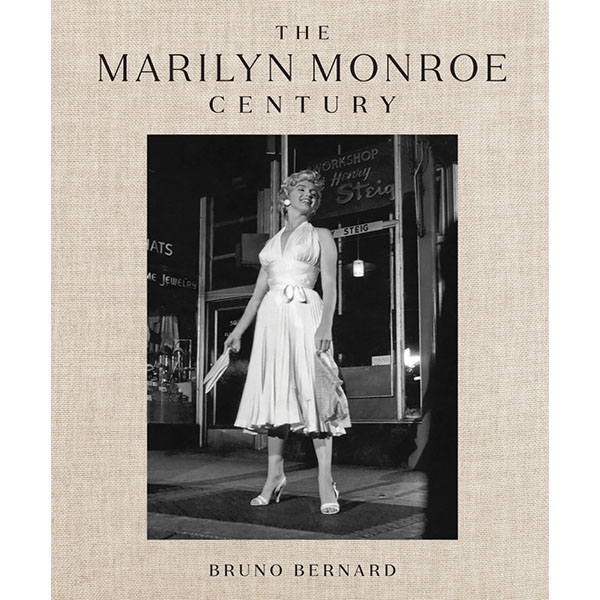
The Marilyn Monroe Century: From Norma Jeane to Icon―A Story in Photographs
By Joshua John Miller (03MFA) and M.A. Fortin
Photographer Bruno Bernard; Foreword by Rose McGowan
Abrams Books
The Marilyn Monroe Century: From Norma Jeane to Icon―A Story in Photographs
By Joshua John Miller (03MFA) and M.A. Fortin
Photographer Bruno Bernard; Foreword by Rose McGowan
Abrams Books