Pancreatic Cancer Patient Finds Support in UI Health Care Survivorship Programs
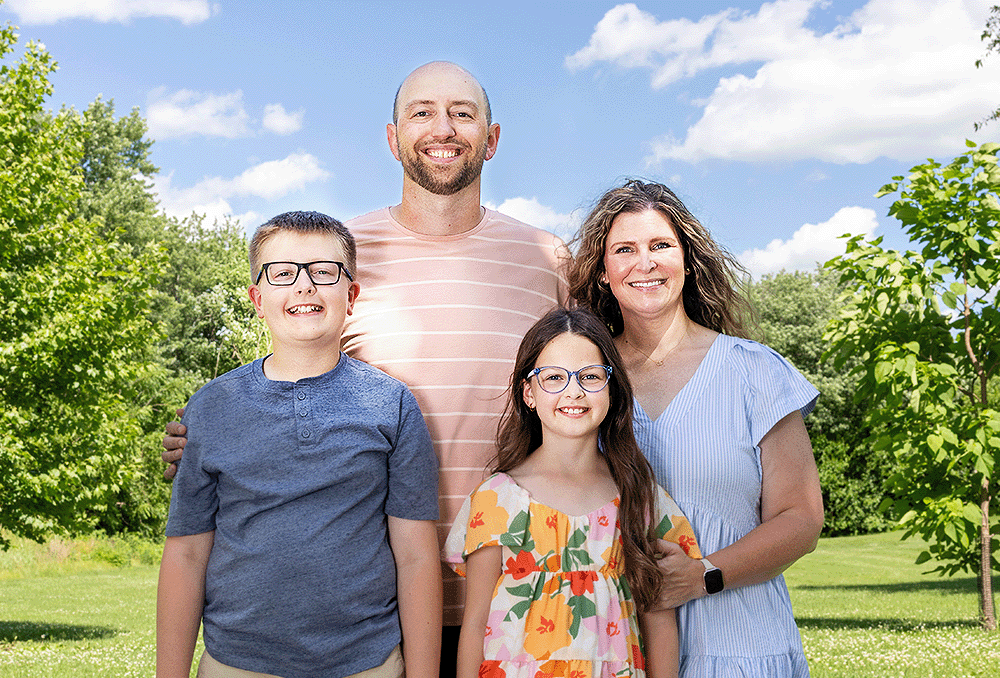 Photo: Seth Diehl
As a cancer survivor, Ryan Dwars (pictured at center with his family) continues to participate in UI Health Care Holden Comprehensive Cancer Center programs that support his long-term health and well-being.
Photo: Seth Diehl
As a cancer survivor, Ryan Dwars (pictured at center with his family) continues to participate in UI Health Care Holden Comprehensive Cancer Center programs that support his long-term health and well-being.
Ryan Dwars is still processing the events that unfolded since March 2021 when he was diagnosed with pancreatic cancer. The countless hospital treatments. The time away from his kids. The friends he’s lost to the disease.
Today, the 42-year-old has surpassed five years since his diagnosis—a milestone reached by 13% of pancreatic cancer patients, according to the American Cancer Society. Since March 2025, his quarterly CT and PET scans have shown no evidence of the disease.
Ryan and his wife, Brooke Hammond Dwars (07BBA), remain vigilant of recurrence, closely monitoring his diet, daily supplements, and symptoms. The Iowa City West High School special education teacher undergoes monthly immunotherapy treatments and participates in group and individualized therapy at University of Iowa Health Care Holden Comprehensive Cancer Center, which have helped him manage the survivors’ guilt he’s felt in recent years. “When you’re in the thick of it and trying to fight to survive, you don’t even have a chance to think about the mental side,” says Ryan, a father of two. “We didn’t know what the long-term effects would be.”
As more families are affected by cancer in Iowa, which has the second-highest incidence rate in the country, researchers at the UI are working to develop more targeted treatments that help extend and improve the lives of cancer patients, while better equipping them to understand and manage the side effects that can last a lifetime.
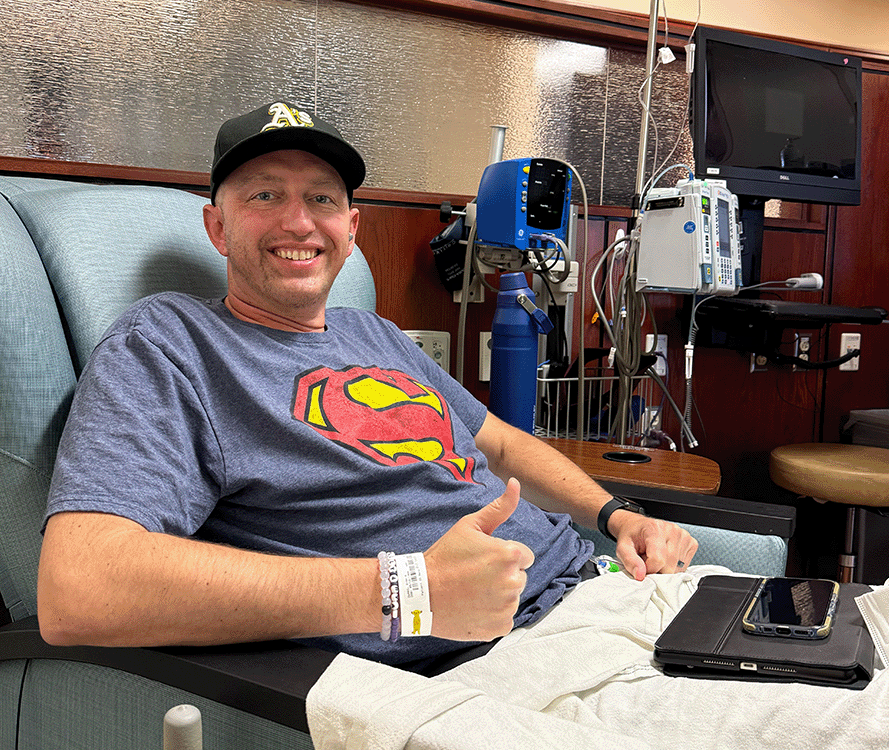 PHOTO: DWARS FAMILY
Ryan Dwars has received intravenous vitamin C as part of his treatment, which has demonstrated cancer-fighting potential in clinical trials at Iowa.
PHOTO: DWARS FAMILY
Ryan Dwars has received intravenous vitamin C as part of his treatment, which has demonstrated cancer-fighting potential in clinical trials at Iowa.
The Promise of Vitamin C
Joseph Cullen (86MD, 91R) receives inquiries every week from pancreatic cancer patients around the world eager to receive intravenous vitamin C as part of their treatment. The UI professor emeritus of gastrointestinal surgery has helped lead three clinical trials at Iowa that have demonstrated its cancer-fighting potential when combined with standard treatments like chemotherapy and radiation. In recent years, a randomized phase 2 trial at Iowa doubled the median survival time of pancreatic cancer patients who received intravenous vitamin C in addition to chemotherapy compared to those who only received chemotherapy. Additionally, those who received intravenous vitamin C better tolerated the chemotherapy and experienced minor side effects from the infusions.
Cullen’s next step in continuing the decades-long work of his colleague Garry Buettner (69MS, 76PhD) is starting a randomized, multicenter phase 3 clinical trial to confirm the treatment’s safety and effectiveness in a large, diverse group of patients. Unlike the phase 2 trial, which received National Institutes of Health funding, this trial needs private or industry funding to begin. “We have the statistical analysis all ready to go and the sites chosen; we just need the money,” says Cullen. “Any amount that someone can give is important and beneficial.”
Ultimately, a successful phase 3 trial would make intravenous vitamin C more widely available and affordable to pancreatic cancer patients like Ryan, who pays out of pocket to receive these infusions as part of his immunotherapy treatment in addition to expensive supplements. “I think most people are aware, but you really don’t know until you’re in it,” says Brooke. “A cancer diagnosis can financially ruin you.”
The Iowa Cancer Registry estimates 21,700 new, invasive cancers will be diagnosed among Iowans in 2026. But as Ryan and Brooke have learned over the past five and a half years, the physical and mental toll of cancer often extends far beyond the treatment.
The Trials of Survivorship
Cancer survivors can experience a variety of long-term side effects, ranging from fatigue and neuropathy to cognitive impairment and mood disorders. Stephanie Gilbertson-White, an associate professor in the College of Nursing and the Supportive Oncology Clinical Research Program leader at Holden Comprehensive Cancer Center, says patients experience a drastic shift after they complete treatment that can impact their mood and manifest as depression, anxiety, or symptoms of PTSD. “They’ve gone through an experience that’s often lifesaving, but it’s also life-changing,” says Gilbertson-White, a nurse scientist. “There’s a long period of surveillance that needs to happen where they’re continuing to monitor for recurrence and that can be really stressful. There’s also a loss of connection to their care team.”
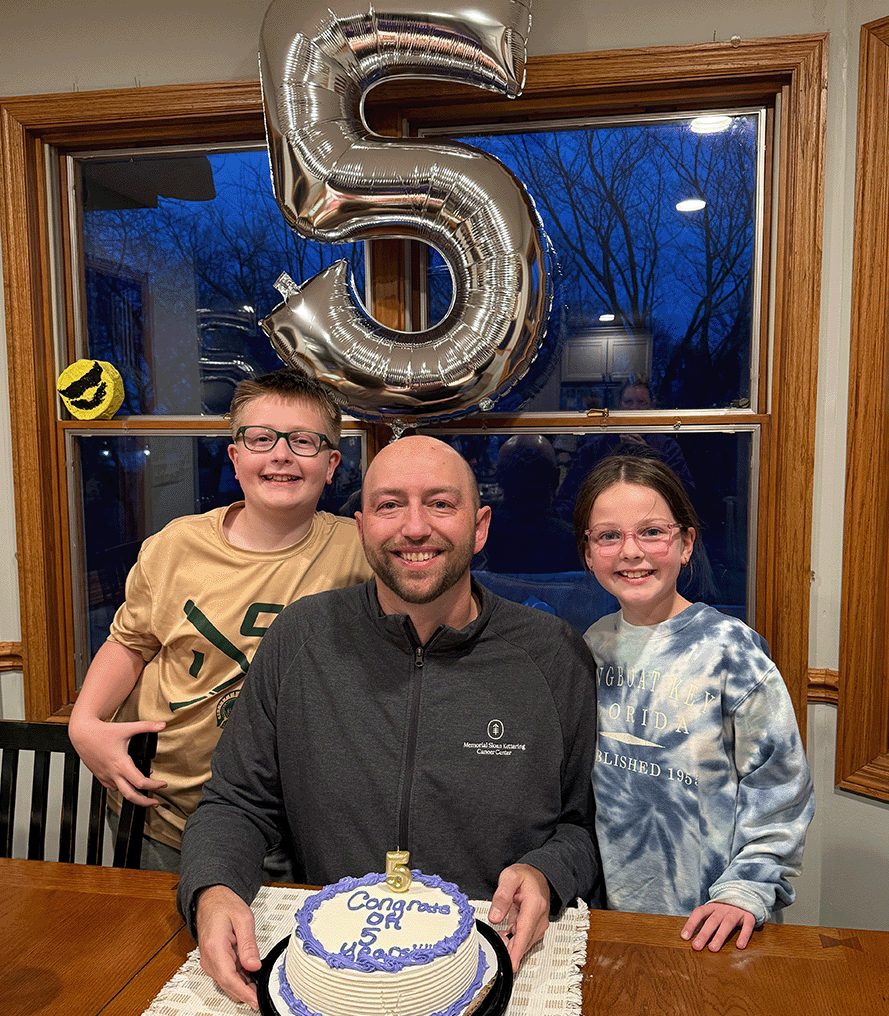 PHOTO: DWARS FAMILY
Ryan Dwars celebrates five years of survival since his cancer diagnosis. According to the American Cancer Society, only 13% of pancreatic cancer patients reach this milestone.
PHOTO: DWARS FAMILY
Ryan Dwars celebrates five years of survival since his cancer diagnosis. According to the American Cancer Society, only 13% of pancreatic cancer patients reach this milestone.
To better prepare cancer patients for survivorship, Gilbertson-White is exploring how large data sets like medical records can help predict which patients are at increased risk for specific symptoms. These results could help health care staff provide personalized treatment plans and monitoring schedules as patients transition from completing their cancer treatment to survivorship. They could also inform the patient’s lifestyle choices, topics they discuss with their provider, and which prevention strategies to implement.
Gilbertson-White is also investigating better ways to integrate the perspective of primary caregivers into the research, as they often closely track symptoms and communicate the needs of a patient. She says philanthropic support has allowed her to be more nimble in advancing her work with fewer restrictions compared to NIH funding. One notable gift in 2020 allowed her to develop and test a mobile app, OASIS (Oncology Associated Symptoms and Individualized Strategies), that helps cancer patients better understand their symptoms and develop self-management skills.
Ryan manages his mental health challenges through therapy and songwriting. He has written four songs through an initiative UI Health Care’s Adolescent and Young Adult Cancer Program introduced to him that pairs cancer patients and survivors with songwriters to help them express themselves and heal through music. He dedicated one of the songs to Brooke, who has served as his primary caregiver throughout his cancer journey, managing many of the family’s daily tasks and Ryan’s health care needs.
“The multiple roles that a caregiver takes on are very important, and I’m truly blessed that Brooke is there to take that all on,” says Ryan. “Our lives don’t stop; our kids’ lives don’t stop—and I can’t imagine if it was just me having to take all that on.”
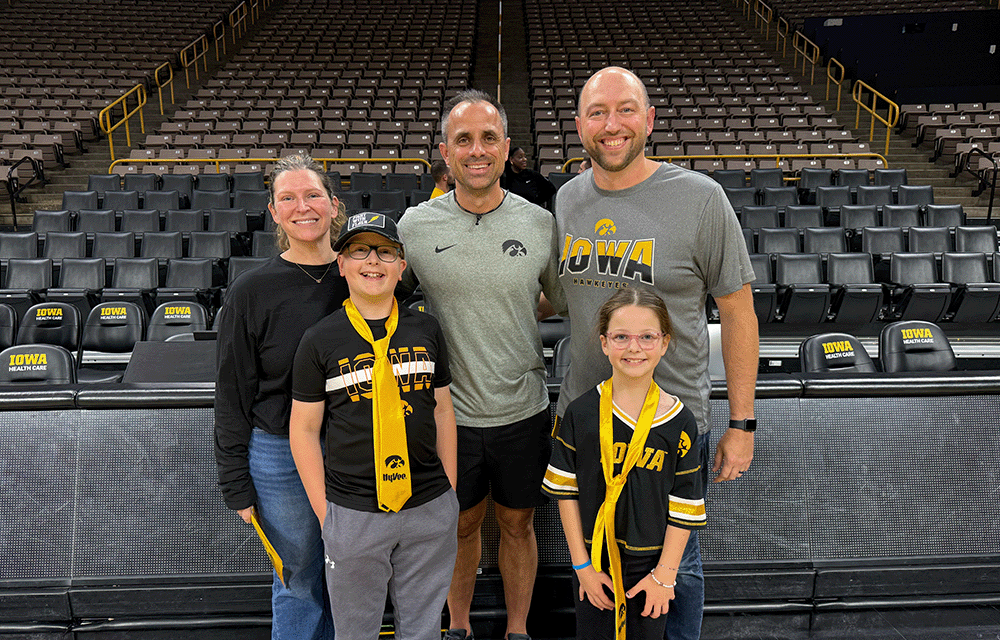 Photo: Dwars Family
Ryan Dwars and his family attended a Hawkeye men's basketball practice through an event organized by the UI Health Care Adolescent and Young Adult Cancer Program.
Photo: Dwars Family
Ryan Dwars and his family attended a Hawkeye men's basketball practice through an event organized by the UI Health Care Adolescent and Young Adult Cancer Program.